marital discrim ringsWere you fired from marital status discrimination, because of your spouse or something that your spouse did? Or, were you discriminated against at work because you are single, married, or divorced?

Under Minnesota law, it is illegal for an employer to refuse to hire, terminate an employee, or discriminate against an employee based on their marital status.

What Does Marital Status Mean?

The most common forms of marital status discrimination are directed at employees due to their status as being single, married, or divorced. But, unlike many other states that protect employees from discrimination based on the traditional understanding of marital status (i.e. single, married, divorced), the Minnesota Human Rights Act (“MHRA”) goes beyond those protections.

Under the MHRA, marital status depends not only on whether a person is single, married, remarried, divorced, separated, or a surviving spouse, but also, in employment cases, includes protection against discrimination on the basis of the identity, situation, actions, or beliefs of a spouse or former spouse. Thus, the MHRA protects an employee from an employer’s bias against the employee’s spouse or former spouse.

For example, marital status discrimination in employment can occur when one spouse is terminated or discriminated against because of their spouse’s identity (e.g. city sheriff, union representative, celebrity), the spouse’s situation or actions (e.g. spouse having a criminal record), or their spouse’s beliefs (e.g. political, religious).

Discrimination may also occur when both spouses work for the same company, but one is terminated due to their association with the other spouse. Similarly, if a spouse terminates their former spouse after an argument over a shared property dispute in a divorce, this may qualify as marital status discrimination.

What Should I Do?

If you have been discriminated against or retaliated against because of your marital status or the actions of your spouse, we encourage you to contact Halunen Law to speak with an experienced attorney today.

Halunen Law’s employment law group is a team of tenacious attorneys dedicated to ensuring employee rights and protections. If you’ve been wrongfully terminated, have faced discrimination, sexual assault, or harassment, or have been retaliated against for reporting illegal workplace activity, contact our office today. We’ll assess your case and determine your best path toward seeking justice. We represent clients on a contingency basis, so there is no cost unless we win.

red-whistle-headA recent decision out the 6th Circuit reinforces that former employees are protected from retaliation under the False Claims Act – even when the retaliatory conduct happens after they are fired or leave the company.

In the lawsuit, an employee alleged he was “marginalized” for insisting on compliance with the law during his employment and then “blacklisted” in his industry after being fired. He filed an FCA case that the hospital where he had been working was providing illegal kickbacks to physicians in exchange for referrals – conduct that would clearly violate the False Claims Act. The employee applied to nearly 40 different companies and alleged the hospital’s retaliatory conduct kept him from successfully securing new employment.

The anti-retaliation provision of the FCA provides that any employee, contractor, or agent shall be entitled to all the relief necessary to make them whole if they are a) discharged, b) demoted, c) suspended, 4) threatened, 5) harassed, or 6) in any other manner discriminated against regarding the terms and conditions of their employment for acts done to stop violations of the FCA.

According to the 6th Circuit, these protections are broad and far-reaching – even so far as to reach former employees: “the anti-retaliation provision of the FCA may be invoked by a former employee for post-termination retaliation by a former employer.”

In making the decision, the Court noted that the purpose of the FCA’s anti-retaliation provision is to encourage the reporting of fraud and facilitate the federal government’s ability to stop fraudulent conduct by protecting those who assist in its discovery and prosecution. The Court further said: “If employers can simply threaten, harass, and discriminate against employees without repercussion as long as they fire them first, potential whistleblowers could be dissuaded from reporting fraud against the government.”

Employees are entitled to significant damages when their employees retaliate against them in violation of the FCA. In fact, they are “entitled to all relief necessary to make that employee whole.” Most notably, and unlike many other employee protections, current and former employees may receive double back-pay damages under the FCA. This amount can be large, especially when an underlying FCA case may go on for years while the government litigates the matter. Employees may also be entitled to reinstatement, front pay, emotional distress, other special damages, and their attorneys’ fees and costs.

The 6th Circuit decision is controlling authority in the states of Michigan, Ohio, Kentucky, and Tennessee. The 10th Circuit has ruled that the FCA does not cover former employees. This ruling applies in Oklahoma, Kansas, New Mexico, Colorado, Wyoming, and Utah. Other circuits have not yet taken a position on this issue, but this new ruling will make the argument more compelling in circuits that haven’t yet decided.

For many current or former employees facing retaliation after reporting fraudulent conduct or insisting that their employer follow the law, their rights are now more strongly protected. If this situation applies to you, you should contact an experienced attorney with deep knowledge of the False Claims Act and employment law. At Halunen Law we have both.

Download a PDF of the 6th Circuit Decision

NathanielS-headshot-300×300Having recovered millions of dollars on behalf of whistleblowers in both employment retaliation cases and qui tam whistleblower lawsuits under the False Claims Act (FCA), attorney Nathaniel F. Smith is relentless in his pursuit of justice.

Halunen Law employment attorneys Amy Boyle and Colin Pasterski recently filed suit on behalf of Din Dol, alleging the Minneapolis Fire Department engaged in racial discrimination and retaliation against the firefighting recruit. Cadet Dol was on a path to become the city’s first Somali-American firefighter.

The suit alleges Dol was subjected to “outward aggression” by classmates and supervisors, including a physical assault.  and was ultimately fired as retaliation for conveying his concerns.  After experiencing “increased hostile treatment” and reporting his concerns to department leadership, he received negative training feedback.

He was fired on February 21, 2020, less than one month before his anticipated graduation date, even though he had passed two certification exams. The complaint cites a history of racial discrimination against people of color. As of 2016, more than 70% of the department’s firefighters were white—a percentage that has only increased in recent years.

“It is an honor to represent Din Dol,” said Halunen Law employment attorney Colin Pasterski. “This case shines an important spotlight on the underrepresentation of Somali Americans and other people of color in the Minneapolis Fire Department.

Halunen Law has a long-standing history of bringing not only justice but societal change through successful litigation. We hope this case will have a profound impact on the Minneapolis Fire Department’s practices in the future and look forward to helping our client achieve resolution of this matter.”

Din Dol is represented by Halunen Law employment attorneys Colin Pasterski and Amy Boyle.

Read the Complaint filed in Hennepin County

Read recent coverage of this story in the Star Tribune and Associated Press

About Halunen Law

With offices in Minneapolis, Chicago, and Phoenix, Halunen Law offers experienced legal representation to employees, whistleblowers, and those who have been wronged. Halunen Law has achieved a reputation as a fearless, tenacious, and successful plaintiffs’ law firm, with a laser focus on achieving justice for its clients. For more information visit halunenlaw.com. 

Does federal law protect LGBT individuals?

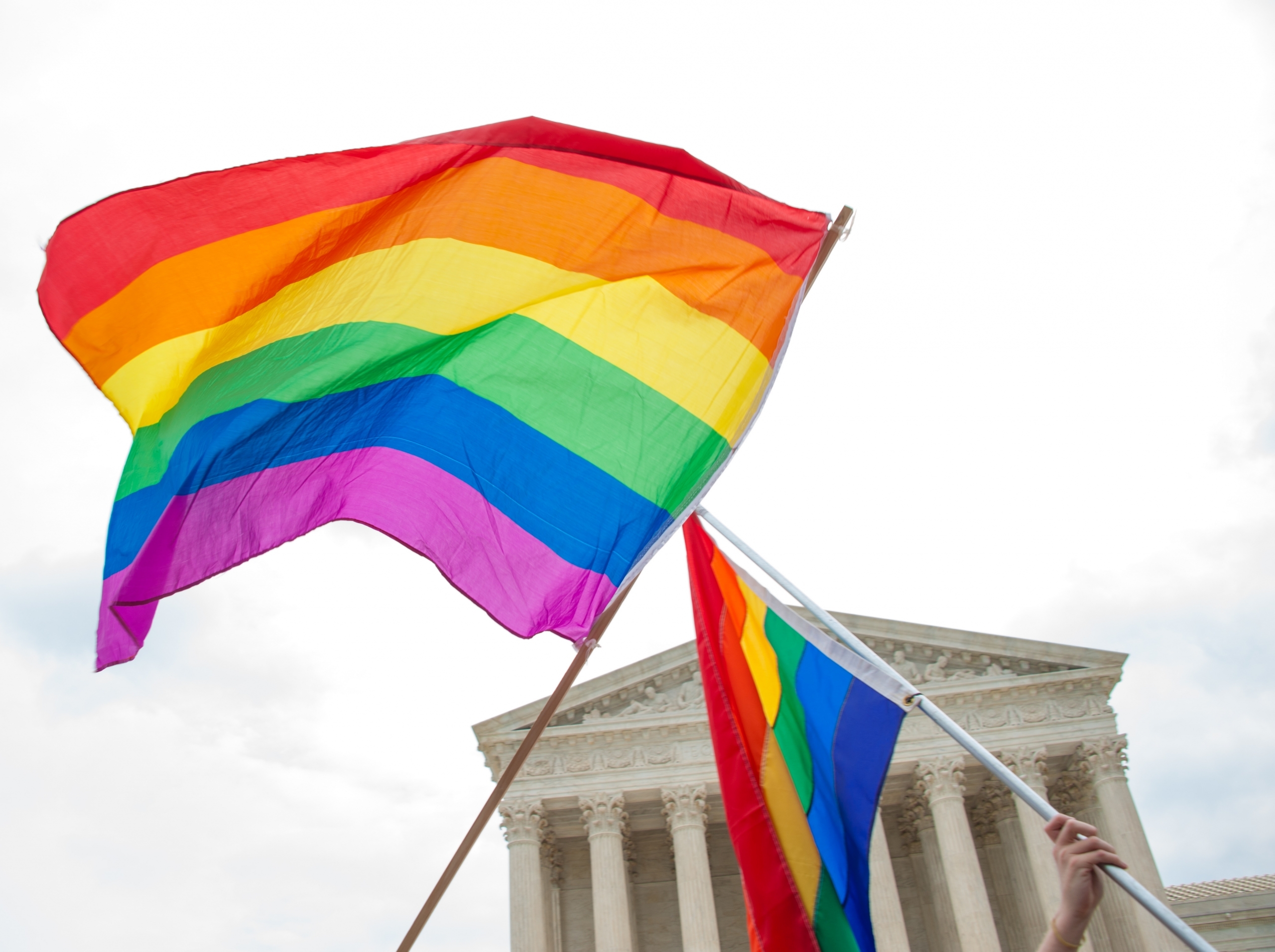
Gay Pride FlagIn a groundbreaking decision, the United States Supreme Court ruled in favor of three employee plaintiffs—two gay men and one transgender woman—in Bostock v. Clayton County, Georgia (which was consolidated with Altitude Express, Inc. v. Zarda and G. & G.R. Harris Funeral Homes v. EEOC).

‘The Court held that Title VII of the Civil Rights Act of 1964 protects gay and transgender employees, but left other areas of life open-ended. The 117th Congress is expected and poised to close those gaps.

The Equality Act—which seeks to protect gay and transgender individuals in housing, employment, public accommodations, federal funding, credit, and the jury system—passed in the United States House of Representatives on May 17, 2019, but the Senate did not act upon it after receiving it; effectively killing the bill.

But on February 18, 2021, the House introduced a similar version of the Equality Act, which also includes broader civil rights protections for people of color, women, and other minority groups in public accommodations. With a democratically controlled legislature and support from President Biden, the Act is expected to pass this year.

Currently, only twenty-two states and more than 125 cities have enacted comprehensive protections for LGBTQ people. Minnesota is one of them.

How are LGBTQ employees protected in Minnesota?

In 1993, the Minnesota Legislature amended the Minnesota Human Rights Act (MHRA) banning both sexual orientation and gender identity discrimination in employment, housing, public accommodations, public services, education, credit, and in trade or business. The broad definition of “sexual orientation” under the MHRA made it the nation’s first state civil rights law protecting transgender individuals from discrimination.

In the employment context, the MHRA also protects employees from reprisal (i.e., retaliation) for reporting differential treatment on the basis of a protected characteristic (e.g., sexual orientation, gender identity, sex, race, age, etc.). Employees who work in Minnesota (even if it is just for a handful of days per year) may be protected by the MHRA.

If you have just been fired, or you suspect you are about to be fired, and you think that your termination may be for an illegal reason (e.g., discrimination, retaliation for reporting discrimination), the experienced attorneys at Halunen Law are here to help.  Contact us today for a free consultation.

Here are some things you should know before stepping forward as a whistleblower.

1. Whistleblowing can be a challenging and lengthy process

Whistleblower cases often take years, and the consequences of blowing the whistle can upend your life and that of your family. Your integrity can be attacked, your reputation can be smeared, your livelihood can be impacted, and your employability can be adversely affected. Laws exist to protect, reward, and vindicate whistleblowers, but litigating under those laws and enforcing your rights is a challenge as well.

2. Whistleblowing can be a rewarding, fulfilling process

Nothing’s worth having if it’s not worth a fight. Whistleblowing can be immensely rewarding, even though sometimes difficult. Whistleblowers are often driven by a devotion to courage, a desire for a clear conscience, and concern for the public good. Financial rewards may be available to compensate whistleblowers for their efforts and injustices. And even when whistleblower cases do not result in a financial reward, they often bring about improvements and important changes in the offending company’s behavior. They also allow whistleblowers to sleep peacefully at night and look in the mirror without regret, knowing they did their part in uncovering and pointing government officials to misconduct that harms all of us.

3. There are several whistleblowing statutes, not one, all-encompassing law

More than 50 federal laws and a myriad of state and local laws protect whistleblowers from retaliation. Your rights and level of protection depend on the type of misconduct you are reporting, the procedures of the law(s) most applicable to you, what you disclose, when, and to whom. Before making the call, learn about which law fits your situation and gives you the fullest possible protection. The best way to do that is to talk with an experienced False Claims Act / qui tam attorney.

4. Public agencies and public policy endorse whistleblowing

Federal and many state legislatures recognize the vital contributions whistleblowers make in detecting corporate crimes and have enacted anti-retaliation and reward statutes. Many government agencies have special agencies to investigate reports by whistleblowers. Don’t rely on media stereotypes. Those who understand the importance of rooting out illegal conduct, understand that the courage of individuals like you is critical to the well-being of our communities. That is why laws exist to protect you.

5. Do not expect to remain anonymous

Some whistleblower statutes allow you to keep your identity secret indefinitely. Others, like the federal FCA and many state counterparts, begin with the case under seal, or not publicly available, for a period of time. However, the case will eventually be unsealed.  And sometimes companies under investigation can figure out a whistleblower’s identity by the nature of events underlying the case or by the kinds of information the government requests. In nearly every case, the case becomes unsealed, or publicly available, after the government notifies the court whether it will intervene. In short, prepare to be identified as a whistleblower.

The decision to become a whistleblower is a personal one that only you can make. Contact an experienced whistleblower attorney at Halunen Law for a free consultation to discuss the rewards and risks of a whistleblower case to help you decide.

NathanielS-headshot-300×300As an attorney with Halunen Law’s FCA Practice Group, Nathaniel Smith is determined to bring fraudulent conduct to light, and to justice. Having recovered millions on behalf of whistleblowers in both employment retaliation cases and qui tam whistleblower lawsuits under the False Claims Act (FCA), he is relentless in his pursuit. Learn more about Nathaniel F. Smith.

Whistleblower law book and gavel in a court.The news in recent years has had many stories about “whistleblowers”—what they reported, what caused them to blow the whistle, and what happened as a result. Perhaps you have seen some sort of misconduct on the part of an employer, a corporation, a competitor, or a health provider. And you wonder “Am I a whistleblower?” or “What do I do?” Or perhaps you have already reported some wrongdoing and are wondering if you are now experiencing retaliation.

There are many kinds of whistles to blow, many incentives for blowing the whistle, and many protections for whistleblowers. The procedures and processes vary, depending upon which law offers the protection. This means that the wise thing to do if you are in this situation is to contact an experienced whistleblower attorney who can help you sort out what has happened and what to do.

Protection for Blowing the Whistle on Wrongful Conduct

A whistle can be blown when you are experiencing a personal employment situation that violates federal or state laws. For example, if you are experiencing discrimination at work because of your gender, race, or religious beliefs, you can report that discrimination. Federal and state laws generally prohibit retaliation for making the report. If retaliation occurs, there are actions you can take, including filing a lawsuit. A successful whistleblower claim of this type has the potential to deter employers from illegal conduct and, importantly, to make you whole, for example, by making up lost pay and compensating you for the emotional distress you have experienced.

Many federal and state laws prohibit retaliation for other types of whistleblowing, including reporting workplace safety violations, abuse of vulnerable adults, discriminatory conduct against other employees, illegal pay practices, and violation of other state and federal statutes. Federal and state employees often have special protections for reporting government wrongdoing, waste, fraud, and abuse. These anti-retaliation provisions provide similar “make-whole” relief to a whistleblower as described above.

Reward Programs for Blowing the Whistle

Federal and state legislatures have also enacted premiums on some types of whistleblowing to provide whistleblowers with money incentives to come forward and identify illegal conduct. These whistleblower reward programs typically involve reporting illegal conduct that cheats the government, taxpayers, or investors of money and in so doing also causes other harm. The rewards in these whistleblower programs are typically a percentage of money the government collects from the wrongdoers as a result of a report and may depend on the type and amount of assistance the whistleblower provides to the government. These awards can be substantial depending on the type of report that has been made. Finally, these reward programs generally have anti-retaliation provisions as well to protect employee whistleblowers.

Whistleblower reward programs include federal and state statutes (False Claims Act statutes) prohibiting fraud against the government in any area, including health care, defense procurement, small business programs and government grants. Significant tax fraud is covered by a separate IRS whistleblower statute. Rewards are also available to persons who report fraud that impacts investors in securities and those who participate in commodities futures. Corrupt foreign practices by corporations are also covered by a rewards statute (Foreign Corrupt Practices Act) that covers, among other things, bribery involving foreign governments.

These statutes recognize that the government cannot monitor all of its activities to identify where illegal conduct or fraud has occurred, and that individuals who observe the illegal conduct are in a much better position to assist the government in challenging that wrongdoing. Billions of dollars have been collected as a result of whistleblower actions under statutes described above.

When You Reach a Turning Point

It is daunting to reach a turning point because you have experienced or observed conduct that you cannot ignore. This is when you need experienced whistleblower counsel to help you understand your options and chart your course. Knowing which statutes apply to your situation and how to invoke them is obviously important along with many other issues. For example, it is important to know that some whistleblower programs allow the whistleblower to remain anonymous, and some do not, but that there is always a risk that a whistleblower will be identified. It is also important to know that blowing the whistle can take a long time, but that patience will bring satisfaction that you have done what you can and need to do.

Whistleblower laws empower individuals to challenge wrongdoing. Unethical, unlawful, and unsafe practices tend to get worse the longer they are allowed to continue. More people can be hurt, more taxpayer money can be wasted, and those who follow the rules can lose to underhanded tactics. By stopping wrongdoing, whistleblowers send the message to individuals and organizations that there are repercussions of illegal conduct, and they will be held accountable. Whistleblowers who feel this urgency to act provide a tremendous service to their communities, their employers, taxpayers, and their government. Halunen Law values the courage of those who step forward and is committed to providing them with wise, compassionate, and results-oriented counsel.

SusanC-headshot-300×300A Partner at Halunen Law, Susan Coler is a member of the Halunen Law False Claims Act (FCA)/Whistleblower Practice Group. She represents whistleblowers nationwide who challenge illegal corporate conduct, particularly fraud against the government. She represented a relator in an FCA claim against Abbott Laboratories that resulted in a civil settlement of $800 million (total settlement of $1.5 billion), the fifth-largest civil healthcare recovery ever achieved under the FCA.

Photo of a tall stack of documents with a warmly colored background.It is unusual for any plaintiff or relator to achieve a summary judgment ruling in its favor in any type of case. But in U.S. v. Dynamic Visions Inc., DBA Dynamic Visions Home Health Services, et al., — F.3d —, 2020 WL 4914069 (D.C. Cir. Aug. 21, 2020), the D.C. Circuit affirmed such a ruling in a False Claims Act (FCA) case, alleging that a home health care company submitted false claims for reimbursement to the D.C. Medicaid program. The Circuit’s opinion shows how a relator can succeed on summary judgment and provides other useful discussions on evidence, civil contempt, piercing the corporate veil, and the proper calculation of damages in a Medicaid FCA case.

The defendant, Dynamic Visions, utterly failed a routine government audit of its operations. A review of 25 randomly selected patient files revealed a lack of the required “Plan of Care” (POC) for patients. The files either contained no POC or had deficient POCs (e.g. lacked a physician signature, contained untimely or forged signatures, or authorized fewer hours of care than claimed in bills to Medicaid). Id. at *1. The federal government executed a search warrant at the business and the residence of the owner and company president, Isaiah Bongam. The ensuing investigation revealed Bongam’s funneling of money from the company into private accounts (including offshore in Cameroon). Id. at *2.

The government brought an action against Dynamic Visions and Bongam alleging FCA violations, and its complaint listed false billings for 25 patients that were not authorized by a valid POC. The defendants failed to cooperate in discovery, particularly in providing evidence that the patients had valid POCs, and claimed that the government had seized their documents, even though they had been given a disc containing searchable PDFs of all relevant documents. Id. at *2.

Because defendants produced no documents showing valid POCs for these patients, the government moved for summary judgment. When the defendants failed to challenge the government’s statement of facts, the court granted the motion. The defendants appealed. Id.

The D.C. Circuit affirmed, except it vacated a small subset of claims involving POCs that the government claimed were forged, and for which it found questions of fact remained. Id. at *3. Most useful in the opinion is the panel’s discussion of the sufficiency of the evidence showing—“beyond genuine dispute”—the knowing submission of false claims.

The government provided evidence showing how each file lacked the proper authorization. In response, the defendants offered only conclusory allegations that the files were adequately documented and generally referenced how they followed policies and procedures. The Circuit found that the defendants provided nothing on which a jury could decide in their favor; they did not even provide the claimed policy and procedure manual they referenced in their conclusory defenses. Focusing on the available “reckless disregard” standard for falsity, the opinion affirms the district court’s conclusion that  “‘even a cursory review’ of the files would have revealed the ‘rampant’ false claims,” thereby justifying summary judgment at least on reckless disregard grounds. See 31 U.S.C. § 3729(b)(1)(A)(iii). Id. at *4-5. Rejecting the defendants’ arguments that scienter could not be pieced together, the Court stated there was no need to aggregate individual knowledge because “any single person who looked at the patient files should have known that the company sought reimbursements unsupported by adequate POCs.” Id. at *5.

Practitioners may also find these additional discussions useful:

Civil Contempt: Citing a two-year history of discovery non-compliance, the Court affirmed the imposition of a contempt finding against defendants, precluding them from presenting evidence in their summary judgment opposition that they did not already produce in discovery. Id. at *6.

Piercing Corporate Veil: Besides evidence of a “unity of interest between the individual and the entity,” the opinion affirmed the district court’s conclusion that Bongam’s transfer of large sums of money to his personal accounts was compelling justification to pierce the corporate veil. This was particularly so because insulating the owner from liability here would be unjust. Id.

Damages and the Federal Share of Medicaid: The Circuit sent back the damages calculations because the district court had awarded damages based on the full amount of the unauthorized reimbursements, rather than the 70% share paid by the federal government. Id. at *7.

The defendant here may have had “dynamic visions” for its home health agency, but its failure to follow even basic protocols regrettably led it into the dark tunnel of FCA liability. The take-away for practitioners is the viability of relying on reckless disregard as a basis for seeking summary judgment on a proactive basis and the type of evidence that can result in success.

SusanC-headshot-300×300A Partner at Halunen Law, Susan Coler represents whistleblowers across the United States in many different industries who challenge illegal corporate conduct, including fraud against the government. As a Labor and Employment Law Specialist, Susan has also brought successful retaliation claims in connection with False Claims Act (FCA) /qui tam cases and as stand-alone actions. Learn more.

Halunen Law - Alcoholism & Drug Addiction Disability The current opioid epidemic afflicting our nation brings up complex issues regarding drug or alcohol addiction, employee rights, and what constitutes a disability.

The Americans with Disabilities Act of 1990 (“ADA”) and the Minnesota Human Rights Act (“MHRA”) generally protect employees with alcoholism or drug addiction (as disabled) if the employees can perform the essential functions of their jobs, even if they need a reasonable accommodation to do so. But if employees are unable to perform their job even with a reasonable accommodation, or if the employees are a threat to safety, then they are not protected under the ADA or MHRA. To qualify as disabled, an employee’s addiction must impair major life activities, such as walking, sleeping, or thinking. In other words, depending on the court you are in, alcoholism and drug addiction is not automatically considered a disability, but will be addressed on a case-by-case basis.

Read More…

During the economic downturn, many Minnesota workers may have turned to temporary employment or staffing agencies to find work. Temporary and contract workers often have different benefits, contracts, and responsibilities than permanent employees, but do they have different employee rights in the workplace?

Both state and federal laws protect employees from being treated unfairly on the basis of their race, sex, age, disability or religion in the workplace. Workers who experience workplace discrimination on the basis of these, or other protected classifications, have the right to seek legal recourse.

Read More…

“The moral test of government is how that government treats those who are in the dawn of life, the children; those who are in the twilight of life, the elderly; those who are in the shadows of life; the sick, the needy, and the handicapped.”

.- Hubert H. Humphrey

Halunen Law - Protection for Employees Reporting Abuse Against Vulnerable AdultsThrough their state-granted licenses, healthcare facilities have been entrusted with the duty to care for Minnesota’s vulnerable adults. Unfortunately, history gives us horrifying accounts of abuse and neglect of the most vulnerable among us while in the care of those facilities. For decades, the maltreated were left to suffer in silence, unless a vigilant family member or health care provider spoke up.

In April 1980, Minnesota Governor Al Quie signed Minnesota’s Vulnerable Adults Act into law. The Act was intended to protect vulnerable adults from abuse or neglect and to assist those charged with the care of vulnerable adults to provide safe environments. Since then, the Vulnerable Adults Act has been revised to strengthen protections for Minnesota’s vulnerable adults’ population.

Read More…

© 2026 Halunen Law | Minneapolis Employment Attorneys