
GettyImages-524176874 (1)Not long ago, it seemed there was constant news coverage of the #MeToo movement. This period led to open dialogues and more awareness of sexual harassment and assault, including in the workplace. However, it was unclear how behavior may change in the workplace and whether employers would see improvements. Now, there’s data that shows these abuses are still all too common.

According to Tulane University’s #MeToo 2024 Report, consisting of survey data from over 3,300 adults in the United States, 37 percent of women and 14 percent of men believe they have experienced sexual harassment or assault in the workplace at some point. A figure that’s equally concerning? Nearly nine out of 10 of individuals experiencing sexual harassment or assault have not disclosed their experiences.

Workplace sexual harassment and assault continue to affect a significant number of employees. Many endure these experiences in silence, unsure of what constitutes harassment or assault, and what legal protections they may have. Understanding the definitions, examples, and legal protections related to workplace sexual misconduct is essential and can help provide an early roadmap to getting the justice you deserve.

What Is Workplace Sexual Harassment?

Sexual harassment in the workplace refers to unwelcome conduct of a sexual nature that interferes with an employee’s ability to do their job, because the harassment creates an intimidating, hostile, or offensive work environment. Examples of sexual harassment in the workplace include:

  • Inappropriate comments, text messages, or emails
  • Sexual advances made by a co-worker or manager
  • Requests for sexual favors with an offer of a job, promotion, or favorable treatment (sometimes called quid pro quo harassment)
  • Retaliation from an employer based on the termination of a sexual relationship

Sexual harassment and assault can occur in more than the physical workplace. It can occur through texting and phone calls, in virtual meetings, during business travel, and at work-related and employer-sponsored events offsite.

A workplace harasser may be a supervisor, co-worker, client or even a non-employee with some connection to the company. An example of a non-employee harasser could be a capital investor who has no formal role within the company or a vendor or salesperson doing business.

When Does Workplace Sexual Harassment Become an Assault?

When sexual harassment turns into unwanted physical contact it may become an assault.
Examples of sexual assault include:

  • Unwanted physical actions, such as groping or touching
  • Physically restraining or forcing a company worker to engage in a sexual act
  • Threatening someone into a sexual activity
  • Any sexual act performed on a person who does not consent, even if they are intoxicated, unconscious, or otherwise incapacitated

Your Right to a Workplace Free of Sexual Misconduct

Sexual misconduct is inappropriate in every workplace and employees in most states who experience sexual harassment or assault in the workplace are entitled to certain legal protections provided by their state and/or federal law. These laws vary from state to state, and their applicability may depend on the size of the employer.

For example, under Minnesota’s strong Human Rights Act, employees have the right to:

  • Report harassment or assault to their employer,
  • Expect an investigation that’s fair, prompt, and thorough, and
  • Not face retaliation or some type of negative reaction for making a complaint

Path to Justice: Next Steps if You Were Harassed or Assaulted in the Workplace

If you are experiencing workplace sexual harassment, and if you are able to do so, a first response is to tell the harasser to stop and make it clear that the conduct is unwelcome. Documenting what happened (outside of work time and work devices) is also important and will be helpful if the conduct does not stop. You should include:

  • Dates, times, and locations
  • What was said or done
  • Who was involved, and
  • Whether there were any witnesses

After a single incident, or especially If the harassment persists after you told the harasser to stop, a next step is to report the conduct to your employer, using whatever policies are in place at your employer. This may mean contacting your supervisor, HR department, or another individual designated to handle workplace complaints. If the harasser is your supervisor or HR contact, escalate the report to another senior leader.

If you have experienced a workplace sexual assault, your first step is to get to a safe place away from the perpetrator. Depending on the circumstances, you may then need to get medical attention and/or report to law enforcement. You also will need to report the assault to your employer, as discussed above.

During this time, it’s helpful to write down everything you remember about the assault and preserve any supporting evidence, which may include emails, text messages, voicemails, or photos of inappropriate conduct.

Seeking support as soon as possible is critical. Some available resources are identified in the FAQs below.

How an Employment Law Firm Can Help

If you’ve experienced sexual harassment or assault in the workplace, a common mistake is to try and navigate the legal system alone. Instead, you want an experienced attorney who can help you understand your rights, evaluate your options, and take action when necessary. Whether you are facing retaliation for reporting the harassment, facing a hostile work environment, or emotionally distressed after harassment or an assault that could have been prevented, a plaintiff’s employment law firm can help you understand your options and guide you through the legal steps needed to reddress what happened—steps that may include reporting the misconduct to your employer and other authorities, filing charges, and filing a civil lawsuit against your employer for damages.
Halunen Law is known for fighting aggressively on behalf of their clients and standing up to employers of all sizes. From helping you seek compensation for emotional distress, lost wages, and other damages to holding employers accountable for failing to protect their employees, our attorneys will help restore your voice and dignity as you navigate the next chapter of your life.
Through legal action, remedies an attorney can help you get may include:

  • Back pay and/or a promotion
  • Reinstatement within the company
  • Compensatory and punitive damages
  • Attorney and court fees and costs

Show Strength, but Don’t Go It Alone

It takes courage to speak up and seek out justice. You deserve an experienced employment law firm on your side that’s committed to justice while advocating fiercely for your rights. At Halunen Law, we are here to listen, support, and advocate for you.

If you’ve experienced sexual harassment or assault in your workplace, we encourage you to submit a Case Review Form to our firm. One of our attorneys will review your information, and you’ll receive a response from our firm in a timely manner. There is no charge for this confidential process. And, if we take your case, as a contingency-based law firm, there is no cost unless we win.
We’re here to help you navigate your lawful rights and ensure you get the treatment you deserve. Together, we can hold employers accountable and create a safer and more fair workplace for everyone.

Frequently Asked Questions

Can I be fired for reporting sexual harassment?

It’s illegal in many states, including Minnesota, for an employer to retaliate against you or someone else for reporting harassment. Retaliation can take many forms including unwarranted disciplinary action, demotion, and termination, as well as more subtle conduct such as shunning, or exclusion from meetings. Should retaliation occur, you may have grounds for a separate legal claim.

What if my employer ignores my complaint?

Minnesota employers have a legal requirement to address workplace harassment once they receive a report or observe it themselves. If your employer fails to take action or investigate your harassment claim, you may have a basis for filing a state or federal charge or lawsuit.

How long do I have to file an employment claim?

This can vary from state to state, and depends on the circumstances. It is wise to consult with an attorney as soon as possible to determine the time frames that may apply to you. Generally, in Minnesota you have one year from the date of the last incident to file a lawsuit or a claim with the Minnesota Department of Human Rights (MDHR). Claims under federal law go to the Equal Employment Opportunity Commission (EEOC) and the time frame in Minnesota is 300 days. (In some states EEOC charges must be filed within 180 days). If you work for the federal government you are subject to a 45 day timeframe for filing an EEOC charge.

What if the harassment happened outside of work hours or offsite?

If misconduct is connected with your job in any way, it can still be workplace harassment—even if it happened off company property, outside normal working hours, or through texts or phone calls. So, if the harassment took place during business travel, at an offsite work event, or with co-workers or management outside office hours, you still have the right to a safe, discrimination-free work experience.

What resources are available to victims of sexual assault in the workplace?

  • Local and national sexual assault and rape crisis centers, e.g. Sexual Violence Center 24/7 hotline, 612/871-5111; National Sexual Assault Hotline-1-800-656-4673 or hotline.rainn.org.
  • If offered by your employer, an employee assistance program (EAP).
  • Employment attorneys with experience representing victims of sexual assault.

MINNEAPOLIS, MN., August 15, 2025: Renee Fox, who uses the name Wren Clair in her profession as a meteorologist, has filed suit against KSTP, a local television broadcast station, alleging sexual harassment and retaliation while working as a meteorologist for KSTP. Halunen Law employment attorney, Paul Schinner, is representing Clair in this case.

Ms. Clair abruptly left the station in February 2024 after nearly seven years. The lawsuit alleges that throughout her work at the station, which ended in February 2025, she faced a range of troubling and illegal actions, including “severe, overtly sexist conduct by her coworkers and superiors,” constituting “sex-based disparate treatment and sexual harassment.” Ms. Clair brought her concerns to her supervisor, and in 2024, she reported the conduct directly to the company’s Human Resources department. She was subsequently demoted, fired, and replaced purportedly for poor performance, and replaced with “a less qualified man,” according to the Amended Complaint. The lawsuit further notes that Ms. Clair had two years remaining on her three-year contract at the time of her termination, was popular with viewers, and had consistently received positive performance reviews.

Ms. Clair’s attorney, Paul Schinner, commented, “The Amended Complaint alleges that our client endured persistent sexist double standards and deeply offensive conduct at KSTP for many years, and her firing ‘was abrupt, unexplained, and preceded by no documented disciplinary action, negative reviews, or performance improvement plans.’” Said Schinner, “We look forward to disproving KSTP’s claimed rationale for firing Wren–recited formulaically throughout its Answer—that she was terminated ‘as a result of her poor performance, on which she was repeatedly coached.’ We applaud Wren for her courage in challenging the experiences she had at KSTP and look forward to getting her the justice warranted by KSTP’s treatment of her as articulated in the Amended Complaint.”


Access the Amended Complaint and Defendant’s Answer
Note: click on “Case Number”; enter 62-CV-25-6658. Case title is “Fox v. KSTP-TV, LLC

Read recent news coverage of this story:
Pioneer Press: Meteorologist Wren Clair files sexual harassment suit against former employer KSTP

Minnesota Star Tribune: Meteorologist Wren Clair sues KSTP over sexual harassment and retaliation

MPR/KNOW: Meteorologist sues KSTP for sexual harassment, discrimination

gettyimages-945696662-170667a

Across our nation, women employed at fast-food establishments are frequently experiencing the horrors of sexual harassment, abuse or assault in their workplace. A survey1 conducted by Hart Research Associates reports that 40% of female fast-food workers reported having been sexually harassed, abused, or assaulted on the job. The survey, which included polling 1,217 women aged 16 and older who work in fast food restaurants in non-managerial positions, found that two in five women had been subjected to some form of sexual harassment, including sexual assault and rape in their jobs. This pervasive reality in the fast-food industry suggests that operators of fast-food restaurants may be more concerned about profits than safe recruiting practices, hiring practices, training, and staff supervision.

Types of Harassment Experienced
The researchers asked workers whether they had experienced any of the 18 types of behaviors constituting sexual harassment while on the job, including behavior considered part of hostile work environments. The survey found that the most common types of harassment these workers faced included:

  • Unwanted sexual teasing, jokes, remarks, or questions (27%)
  • Unwanted hugging or touching (26%)
  • Unwanted questions about sexual interests (20%)
  • Sexually suggestive gestures (18%)
  • Kissing or groping (10%)

Further, 8% experienced requests for sex (including in exchange for work benefits), and 2% experienced sexual assault or rape on the job.

Physical and Mental Impacts Suffered
Nearly half of the female respondents who experienced sexual harassment, assault, or abuse reported health problems that resulted, with more than one-third saying they experienced a greater level of stress on the job and more than 20% saying they feared going into their workplaces. Female employees also reported feeling greater sadness and depression, becoming less productive, and having their sleep and appetite affected.

Although many fast-food chains have sexual harassment policies and procedures, female respondents found such policies and procedures ineffective. Most women who reported sexual harassment or assault to the employer were given only informal responses, including advice to simply avoid the offender.

Finally, one in five of those who reported the sexual harassment found that their employer engaged in various forms of retaliation, including cutting hours, scheduling less desirable shifts, assigning undesirable job duties, denying a raise or promotion, and terminating employment.

Additionally troubling, the survey found that 42% of women who experienced unwanted sexual harassment or assault felt they had no choice but to endure the harassment because they could not afford to lose their job.

Halunen Law attorneys are here to help
If you have experienced workplace sexual harassment, assault or abuse, or if your employer retaliated against you for reporting this conduct, the attorneys at Halunen Law can help.

The attorneys at Halunen Law can guide you through the process of reporting sexual harassment, assault, or abuse to company management or human resources—a process that can be an effective way to address the problem.

Halunen Law attorneys can also help you consider other options for addressing sexual harassment, assault or abuse in the workplace. These include filing a Charge of Discrimination with an appropriate state or federal civil rights office or filing a lawsuit against your employer for monetary damages.

You do not have to face sexual harassment, assault or abuse in the workplace alone. Halunen Law attorneys will stand with you to stop the conduct, protect your right to a workplace free of sexual harm, and fight to receive compensation for what you have experienced.

If you feel you’ve experienced illegal action in your workplace, we encourage you to submit a Case Review Form to our firm. One of our attorneys will review your information, and you’ll receive a response from our firm in a timely manner. There is no charge for this confidential process. And, if we take your case, as a contingency-based law firm, there is no cost unless we win.

We’re here to help you navigate your lawful rights and ensure you get the treatment you deserve. Together, we can hold employers accountable and create a fairer workplace for everyone.

1https://hartresearch.com/wp-content/uploads/2016/10/Fast-Food-Worker-Survey-Memo-10-5-16.pdf

A majority of states, 38 to date plus four United States territories, have enacted statutes legalizing the consumption of cannabis to treat specified medical conditions. Some of these jurisdictions provide legal protections in the workplace for medical cannabis/marijuana users. Minnesota is one. That is, individuals in Minnesota with a qualifying medical condition (which includes chronic pain, cancer, seizures and nausea) may consume cannabis purchased from an authorized dispensary if they obtain a prescription from their health care practitioner, submit a valid application to the Department of Health for inclusion on the registry and obtain a medical cannabis card. This blog discusses the scope of protections for these individuals under Minnesota’s medical cannabis statute and, relatedly, rights arising under the state’s stringent drug testing law.

Lawful Consumables

Even without a specific anti-discrimination provision, participants of the Minnesota’s medical cannabis program would be protected against termination under the state’s “lawful consumables” statute, Minn. Stat. § 181.938. This law predates the medical cannabis statute by two decades and prohibits any employer from terminating or refusing to hire an employee for “engag[ing] in the use or enjoyment of lawful consumable products,” provided the use takes place off premises and outside of working hours. Principle among lawful consumables are alcohol and tobacco. Illicit drugs, naturally, fall outside that law’s protections.

Medical Cannabis Workplace Protections

To eliminate any doubt about the legal status of medical cannabis users, the Minnesota legislature included in the THC Therapeutic Research Act (“TTRA”), Minn. Stat. § 152.21, protections applicable to employment (as well as housing and education). Specifically, “an employer may not discriminate against a person in hiring, termination, or any term or condition of employment, or otherwise penalize a person” because the person is enrolled in the program or has tested positive for cannabis following lawful use. Two notable exceptions exist: 

  • When an employee tests positive after consuming medical cannabis during working hours or when impaired at work; and 
  • When hiring or failing to terminate an employee on the registry would “violate federal law or regulations or cause an employer to lose a monetary or licensing-related benefit under federal law or regulations.” 

Unfortunately, the latter exception has created misconceptions among employers who, as a condition of contracting with the federal government, must comply with the federal Drug Free Workplace Act (“DFWA”), 41 U.S.C. § 8102. Businesses large and small erroneously believe that DFWA compliance precludes their hiring of participants in Minnesota’s medical cannabis program because—despite a sea change in public acceptance—cannabis remains a prohibited Schedule I drug under federal law. No exception exists for products lawfully prescribed under the TTRA and other jurisdictions’ medical marijuana statutes.

In fact, the DFWA merely requires that government contractors ensure that “unlawful manufacture, distribution, dispensation, possession, or use of a controlled substance is prohibited in the person’s workplace.” Nowhere does it prohibit an employee’s use of cannabis, legally under state law or even illegally, off premises and outside working hours. 

Plaintiffs alleging discrimination under the TTRA may recover compensatory damages, attorneys’ fees and, in egregious situations, punitive damages. The same facts may also give rise to liability under the Minnesota Human Rights Act (“MHRA”), Minn. Stat. § 363A.01, based on disability discrimination. Although lacking punitive damages, the MHRA allows for trebling of compensatory damages. The MHRA’s liability threshold is higher than the TTRA’s, requiring a plaintiff show an “adverse employment action” (e.g., termination, demotion, refusal to hire). Under the TTRA’s more lenient “penalization” standard, actions as minor as a written warning or transfer from an office to a cubicle may trigger liability. 

Drug Testing and Medical Cannabis

Minnesota has one of the nation’s most stringent drug testing statutes, titled the Minnesota Drug and Alcohol Testing in the Workplace Act (“DATWA”), Minn. Stat. § 181.950. 

If you are subject to drug testing at work, it is important to remember that DATWA authorizes testing only pursuant to a written policy provided to employees prior to testing, which has also been posted in the workplace. Before being made to undergo a drug test, a Minnesota employee additionally must sign an acknowledgement stating that he/she has “seen” the employer’s drug testing policy. 

Moreover, drug testing is allowed only under very specific conditions. They include: (1) job applicant testing following the receipt of a conditional offer of employment; (2) a reasonable suspicion of intoxication or after a work-related accident; and (3) random testing in “safety sensitive” positions. (As an important aside, DATWA does not apply to certain employees involved in interstate trucking, railway workers, pipeline workers, air traffic controllers and others subject to testing under an applicable federal drug testing statue). 

Any employee who tests positive must be given the option of obtaining a confirmatory re-test at his/her expense, and cannot be terminated from employment unless first provided the option of enrolling in a treatment or counseling program. If an employee successfully completes the program, the employer must allow him/her to return to work. Finally, the employer must provide written notice of an employee’s right to explain a positive test. The medical cannabis statute specifically references DATWA for this purpose, stating that a participant may present “verification of enrollment in the patient registry as part of the employee’s explanation” for any such positive test. 

The above is just a summary of DATWA’s many stringent requirements. Owing to its complexity, many employers routinely fail to comply with the statute.

If you are a medical cannabis user who has been subject to discipline following a work-related drug test and would like more information about your legal rights, don’t hesitate to contact the experienced employment lawyers at Halunen Law.

Employee rights and protections can be difficult to understand and navigate. If you believe you’ve experienced illegal activity in your workplace, you need an experienced legal team in your corner.  Halunen Law employment attorneys are deeply committed to fighting for employee rights and have an impressive record of getting results for those they represent. We represent clients on a contingency basis, so there is no cost unless we win. Contact our office today for a free, confidential consultation.

Halunen Law Blog Image In a rare show of bipartisanship, the Senate passed, and the President signed into law the Ending Forced Arbitration of Sexual Assault and Sexual Harassment Act (the “Act”). What are arbitration agreements, and how do they affect your employment?
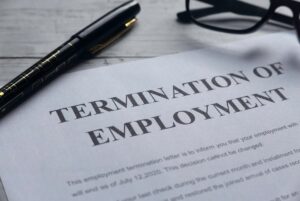
Regardless of their size, many companies manage to squeeze in some sort of an arbitration provision into their employment contracts, non-competes, or even company handbooks. These arbitration clauses are often very broad, requiring employees to forgo their rights to bring any employment-related claims in courts, and forcing them to resolve claims in a private forum—arbitration. Thus, if your employer wrongfully terminates you, even if you bring a claim in court, your employer will have a right to remove your case from court into a private arbitration, where a third-party arbitrator will adjudicate your case.

Employers have utilized this scheme for decades to avoid bad publicity and sweep wrongful conduct under the rug. But this scheme will no longer work as it relates to the sexual harassment/assault claims. The Act allows victims of sexual harassment/assault to disregard the arbitration agreement and pursue their case in a civil court, thus giving them back a right to have their case adjudicated by a jury.
In any case, it is worth remembering that the Act does not force the victim to take the case to court. If the victims of sexual harassment or assault would like to have their claims resolved privately, they still have a right to submit their case to Alternative Dispute Resolution, including arbitration.

The natural question follows—if Congress recognizes how harmful the mandatory arbitration clauses are in employment sexual harassment and assault cases, should such clauses still apply to other discrimination claims? But this is a topic for a different blog.

Halunen Law’s employment law group is a team of tenacious attorneys dedicated to ensuring employee rights and protections. If you feel you’ve experienced illegal action in your workplace, we encourage you to submit a Case Review Form to our firm. One of our attorneys will review your information, and you’ll receive a response from our firm in a timely manner. There is no charge for this confidential process. And, if we take your case, as a contingency-based law firm, there is no cost unless we win.

We’re here to help you navigate your lawful rights and ensure you get the treatment you deserve. Together, we can hold employers accountable and create a fairer workplace for everyone.

employee layoffs downsizing outsourcing halunenlaw.comWith no end in sight to the global pandemic, many companies and especially large corporations are preparing for the new workplace to take hold and are rethinking the way they do business. Some of the changes are welcomed by the employees, for example, a flexible schedule, the ability to work from home, less travel, and a limited commute. But unfortunately, big corporations are rethinking the way they do business by initiating drastic restructuring of its personnel.

Since the start of the global pandemic, many large corporations have drastically restructured their day-to-day business as well as the personnel. And although some of the companies are undergoing cost-cutting initiatives as a result of a business downturn, most large corporations, especially those that have benefited from the pandemic and significantly increased their revenues,[1] are now finding more ways to save money, often at the expense of their employees’ jobs.

You may have heard of Vishal Garg, the CEO of a mortgage company Better.com, who laid off 900 employees over a Zoom call. Or the P&O Ferries Executive who announced via Zoom that the company planned on replacing 800 employees with cheaper agency workers. On its face, it may seem that the company is making a business decision and there is nothing you can do about losing your job if you are laid off in this manner. But, it is crucial to remember, that these “legitimate business reasons” for firing employees often mask the wrongful terminations of employees of marginalized identities and troublemakers/whistleblowers.

When you find yourself in a situation where your employer implements significant layoffs, what can you do to ensure that your rights are protected? Here are some questions to consider:

    • Is it possible that you were laid off while other employees of a different race, gender, religion, age, or disability status got to keep their jobs?
    • Have you recently filed for or received workers’ compensation, or protections under the Family Medical Leave Act (FMLA) or requested a reasonable accommodation due to a disability?
    • Have you recently reported any violations of law to your employer?
    • Have you recently reported discrimination in the workplace, even if the discrimination was not directed at you?
    • Are you a member of a Union and was the Union Agreement followed per layoff terms?
    • Do you have a contract that provides for the terms of your layoff or that allows for-cause terminations only?
    • Are you over 40? Did your employer provide you with all the necessary documents per the Older Workers Benefit Protection Act (OWBPA)? See Laid Off Over 40? You Have Unique Rights.

Being laid off is extremely stressful. The experienced and skilled attorneys at Halunen Law stand at the ready and are committed to advising employees about their rights and helping you decide what to do. To consult with an attorney about your rights, please contact us today.

Halunen Law’s employment law group is a team of tenacious attorneys dedicated to ensuring employee rights and protections. If you’ve been wrongfully terminated, have faced discrimination, sexual assault, or harassment, or have been retaliated against for reporting illegal workplace activity, contact our office today. We’ll assess your case and determine your best path toward seeking justice. We represent clients on a contingency basis, so there is no cost unless we win.

Sources:
[1]  https://www.bloomberg.com/news/articles/2022-03-30/2021-was-best-year-for-u-s-corporation-profits-since-1950

Image Credit: Faizal Ramli  / Shutterstock


It was announced yesterday that the CEO of Insys Therapeutics Inc., Micheal Babich, pleaded guilty to participating in a nationwide scheme to bribe doctors to prescribe its opioid medication Subsys. Babich resigned as the Arizona-based drugmaker’s CEO in 2015. His guilty plea comes just weeks before Insys founder, and one-time billionaire, John Kapoor goes to trial facing allegations of racketeering conspiracy. Read More…

marital discrim ringsWere you fired from marital status discrimination, because of your spouse or something that your spouse did? Or, were you discriminated against at work because you are single, married, or divorced?

Under Minnesota law, it is illegal for an employer to refuse to hire, terminate an employee, or discriminate against an employee based on their marital status.

What Does Marital Status Mean?

The most common forms of marital status discrimination are directed at employees due to their status as being single, married, or divorced. But, unlike many other states that protect employees from discrimination based on the traditional understanding of marital status (i.e. single, married, divorced), the Minnesota Human Rights Act (“MHRA”) goes beyond those protections.

Under the MHRA, marital status depends not only on whether a person is single, married, remarried, divorced, separated, or a surviving spouse, but also, in employment cases, includes protection against discrimination on the basis of the identity, situation, actions, or beliefs of a spouse or former spouse. Thus, the MHRA protects an employee from an employer’s bias against the employee’s spouse or former spouse.

For example, marital status discrimination in employment can occur when one spouse is terminated or discriminated against because of their spouse’s identity (e.g. city sheriff, union representative, celebrity), the spouse’s situation or actions (e.g. spouse having a criminal record), or their spouse’s beliefs (e.g. political, religious).

Discrimination may also occur when both spouses work for the same company, but one is terminated due to their association with the other spouse. Similarly, if a spouse terminates their former spouse after an argument over a shared property dispute in a divorce, this may qualify as marital status discrimination.

What Should I Do?

If you have been discriminated against or retaliated against because of your marital status or the actions of your spouse, we encourage you to contact Halunen Law to speak with an experienced attorney today.

Halunen Law’s employment law group is a team of tenacious attorneys dedicated to ensuring employee rights and protections. If you’ve been wrongfully terminated, have faced discrimination, sexual assault, or harassment, or have been retaliated against for reporting illegal workplace activity, contact our office today. We’ll assess your case and determine your best path toward seeking justice. We represent clients on a contingency basis, so there is no cost unless we win.

A photo of a woman sitting in front of a laptop in a black suit jacket. She's holding her hands over her face as she sits in a brightly lit office with bookshelves in the background.  During my career as an employment law attorney, I have had the unique privilege of representing many employees who have been sexually assaulted during the course of their employment by a co-worker or supervisor.

It makes my heart heavy to know there are so many people out there who have gone through such an experience.

Read More…

In an important decision on June 3, 2020, in the case Kenneh v. Homeward Bound, Inc.[1] the Minnesota Supreme Court held that Minnesota courts are not bound by restrictive federal court guidance in determining what constitutes sexual harassment under the Minnesota Human Rights Act (“MHRA”).

For the past several decades, federal courts have applied an extremely narrow, and very high, bar to what constitutes sexual harassment under federal employment laws. Because of this restrictive interpretation of the law, very few victims of sexual harassment got their cases heard by a jury, because federal judges often dismissed their cases before trial. But in Kenneh, the Minnesota Supreme Court took a big step towards allowing victims of sexual harassment to get their day in court.

History of Sexual Harassment Law

In 1964, the U.S. Congress passed Title VII of the Civil Rights Act, which, among other things, outlawed discrimination on the basis of sex in the workplace. Similarly, in 1973, the Minnesota Human Rights Act was amended to prohibit discrimination based on sex in Minnesota workplaces. Under these laws, part of what an employee must show when bringing a case of sex discrimination is that an employer took an ‘adverse employment action’ against them because of their sex; meaning, the employer caused them to suffer some form of harm because of the employer’s actions. Courts agree that being fired is a clear-cut example of an “adverse employment action.” But what about other actions taken by an employer that don’t rise to the level of a termination? Courts have wrestled with this question for decades.

It wasn’t until the 1980s that courts began to recognize that sexual harassment in the workplace could rise to the level of an “adverse employment action,” and thus violate the law, even if the employee was not terminated as a result of the harassment. In 1980, Minnesota recognized that sexual harassment could be considered an adverse employment action—six years before federal courts did.[2] In subsequent rulings, the U.S. Supreme Court held that sexual harassment could constitute an adverse employment action, and thus be illegal, only if it was “severe or pervasive enough to create an objectively hostile or abusive work environment.”[3] This standard is measured by what a “reasonable person” would consider to be hostile or abusive. Courts recognize that making this determination is not a mathematically precise test. Courts are supposed to consider all the facts and circumstances of the conduct, including the frequency of the conduct; its severity; whether it is physically threatening or humiliating or a mere offensive utterance; and whether it unreasonably interferes with an employee’s work performance. Up until the Kenneh decision, Minnesota courts generally followed federal courts’ interpretation of Title VII when determining whether conduct was sexually harassing under the MHRA.

Federal Courts Keep Victims of Egregious Sexual Harassment from Having Their Day in Court

Unfortunately, federal courts continued to raise the bar higher and higher for what was considered “severe or pervasive” conduct, particularly courts within the Eighth Circuit Court of Appeals, which encompasses Minnesota. The Eighth Circuit has held that in order to show that sexually harassing conduct is severe or pervasive, an employee must show that “the workplace is permeated with discriminatory intimidation, ridicule, and insult,” and that the conduct was “extreme in nature and not merely rude or unpleasant.”[4]

As a result, many truly egregious cases were dismissed before reaching a jury. Here are a few examples:

  • There was no ‘severe or pervasive’ harassment where the employee’s supervisor allegedly grabbed and squeezed her nipple while saying “this is a form of sexual harassment,” and took her towel, rubbed it on his crotch, and gave it back to her.[5]
  • There was no severe or pervasive sexual harassment where the supervisor allegedly put his arms around the employee’s shoulders, kissed the side of her face, called her into his office, locked the door, prevented her from escaping, removed her hand from the doorknob, and attempted to kiss her.[6]
  • A plaintiff could not show severe or pervasive sexual harassment where the supervisor allegedly sexually propositioned her, repeatedly touched her hand, requested that she draw an image of a phallic object, displayed a poster portraying the employee as the president and CEO of the “Man Haters’ Club of America,” and asked her to type a copy of the “He-Man Women Hater’s Club” manifesto.[7]
  • Sexual harassment was not severe or pervasive where the harasser allegedly asked the employee to watch pornographic movies with him, masturbate together, told her she would advance more quickly in the company if she caused him to orgasm, kissed her on the mouth, grabbed her buttocks, brushed her groin, reached for her genitals, and gripped her thigh.[8]

Kenneh Says Minnesota Courts Not Bound by Federal Cases

But in the Kenneh case, the Minnesota Supreme Court held that Minnesota courts are not bound by these restrictive federal cases. In her case, Ms. Kenneh has alleged that on numerous occasions over a five month period, her supervisor told her he liked beautiful women with beautiful legs, licked his lips in a suggestive manner, physically blocked her from leaving her office with his body, told her he liked to “eat women” and that he wanted to “eat [her],” simulated oral sex with his hand and tongue, called her sexy, pretty and beautiful, and stared at her for uncomfortably long periods of time. The district court and the Minnesota Court of Appeals dismissed her case, holding that under the “severe or pervasive” standard, this was not enough evidence for Ms. Kenneh’s case to go to a jury. The Minnesota Supreme Court reversed their decision, saying that it was up to a jury to decide whether the harassment was severe or pervasive.

In Kenneh, the Court held that the MHRA provides broader employment protections than federal law, and must be interpreted as such. The Minnesota Supreme Court also noted that attitudes and social norms about what constitutes acceptable and unacceptable workplace behavior are changing. It told the lower courts that they must take this into account when deciding whether conduct is severe or pervasive, rather than relying on old, restrictive federal cases. Most importantly, the justices cautioned Minnesota courts from deciding whether conduct is severe or pervasive enough, and said instead that a jury should make those determinations in most cases. This means that more victims of sexual harassment in Minnesota will now get their day in court to present their case to a jury of their peers. This is a huge step forward for victims of sexual harassment in Minnesota workplaces.

If you believe you have been the victim of sexual harassment in the workplace, we encourage you to reach out to our firm to speak with an experienced employment attorney for advice.

[1]http://www.mncourts.gov/mncourtsgov/media/Appellate/Supreme%20Court/Standard%20Opinions/OPA180174-060320.pdf

[2] Compare Cont’l Can Co. v. State, 297 N.W.2d 241 (Minn. 1980), with Meritor Sav. Bank, FSB v. Vinson, 477 U.S. 57 (1986).

[3] Harris v. Forklift Sys., Inc., 510 U.S. 17, 21 (1993).

[4] Nitsche v. CEO of Osage Valley Elec. Coop., 446 F.3d 841, 846 (8th Cir. 2006).

[5] Rickard v. Swedish Match North America, Inc, 773 F.3d 181, 183 (8th Cir. 2014).

[6] McMiller v. Metro, 738 F.3d 185, 186–87 (8th Cir. 2013).

[7] Duncan v. General Motors Corp., 300 F.3d 928, at 931–35 (8th Cir. 2002).

[8]LeGrand v. Area Resources for Community and Human Services, 394 F.3d 1098 (8th Cir. 2005).

© 2026 Halunen Law | Minneapolis Employment Attorneys