Nationwide retailer Dillard’s recently settled an employment discrimination lawsuit brought by workers who say the department store forced them to provide detailed medical information in order to use their sick days. The class-action suit lasted for four years and was lead largely by the Equal Employment Opportunity Commission.

The EEOC says that the company forced employees to provide documentation about their specific medical conditions, going beyond a simple requirement that they have a doctor’s note confirming that they were being treated at all.

Read More…

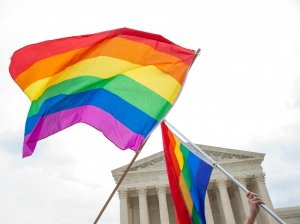
Two rainbow flags catch the breeze in front of the columns of the capitol building. On June 15, 2020, the U.S. Supreme Court ruled that Title VII’s prohibitions against discrimination on the basis of sex also prohibit an employer from discriminating against an employee because of their sexual orientation or transgender status.

Prior to the Supreme Court’s landmark ruling, only 21 states and the District of Columbia, Guam, and Puerto Rico had statutes that protected both sexual orientation and gender identity in the employment sector – meaning approximately 52% of the country’s LGBT population did not have any protections in the workplace, and could be legally terminated without recourse for no other reason than their membership in the LGBT community. The Court’s 6-3 opinion now imposes liability on employers who discriminate against LGBT individuals across the country.

The historic ruling comes from three consolidated cases, which were argued in front of the Supreme Court in 2019. Each of the cases involved an employer firing a long-term employee after the employee revealed their sexual orientation or transgender status to the employer. The question posed to the Court was whether an employer who fires someone simply for being gay or transgender has discriminated against that individual because of the individual’s sex.

In ruling for protections for LGBT workers, the Court analyzed the plain language of Title VII, which prohibits discrimination because of an individual’s sex. It stated unequivocally that “an employer who fires an individual for being homosexual or transgender fires that person for traits or actions it would not have questioned in members of a different sex. Sex plays a necessary and undisguisable role in the decision, exactly what Title VII forbids.”

In its opinion, the Court provided various hypotheticals to shed light on how sex is necessarily (and intentionally) considered when terminating an individual because of their sexual orientation or transgender identity:

  • Consider, for example, an employer with two employees, both of whom are attracted to men. The two individuals are, to the employer’s mind, materially identical in all respects, except that one is a man and the other a woman. If the employer fires the male employee for no reason other than the fact he is attracted to men, the employer discriminates against him for traits or actions it tolerates in his female colleague. Put differently, the employer intentionally singles out an employee to fire based in part on the employee’s sex, and the affected employee’s sex is a but-for cause of his discharge.
  • Or take an employer who fires a transgender person who was identified as a male at birth but who now identifies as a female. If the employer retains an otherwise identical employee who was identified as female at birth, the employer intentionally penalizes a person identified as male at birth for traits or actions that it tolerates in an employee identified as female at birth. Again, the individual employee’s sex plays an unmistakable and impermissible role in the discharge decision.
  • Imagine an employer who has a policy of firing any employee known to be homosexual. The employer hosts an office holiday party and invites employees to bring their spouses. A model employee arrives and introduces a manager to Susan, the employee’s wife. Will that employee be fired? If the policy works as the em­ployer intends, the answer depends entirely on whether the model employee is a man or a woman. To be sure, that employer’s ultimate goal might be to discriminate on the basis of sexual orientation. But to achieve that purpose the employer must, along the way, intentionally treat an employee worse based in part on that individual’s sex.

Each of these examples illustrate that it is not possible for an employer to terminate an employee on the basis of their sexual orientation or transgender status without taking the employee’s sex into consideration. Title VII is a broad statute and does not require sex to be the only reason, or even the primary reason for the termination decision, only that the termination would not have happened but for the employee’s sex. In other words, an employer who terminates an individual because of their sexual orientation or transgender status inherently discriminates against an employee because of their sex, and therefore violates the statute.

Although Minnesota law already provides for protections for LGBT individuals under the Minnesota Human Rights Act (“MHRA”), the Supreme Court’s landmark ruling now makes it abundantly clear that federal law prohibits an employer from discriminating against because of their sexual orientation or transgender status – a massive victory for equality.

If you believe you are the victim of discrimination because your sexual orientation or gender identity, we encourage you to contact Halunen Law for advice.

Woman Telecommuting - Working From Home Taking Care of Baby

The landscape for workplaces is changing. As technology evolves, so too does the way we do our jobs.

Many people can (and do) work just as effectively at home as they do at work. And a recent court case said just that. It held that a telecommuting arrangement could be a reasonable accommodation for a person suffering from a disability. Click to read the case: E.E.O.C. v. Ford Motor Co., 12-2484, 2014 WL 1584674 (6th Cir. Apr. 22, 2014).

If you have a disability, you have a right to reasonable accommodation from your employer. In the case above, the plaintiff had a very bad case of Irritable Bowel Syndrome (IBS), and asked to work from home.

She argued that this would alleviate her IBS symptoms and that most of her work could be done via computer or telephone. Ford denied the request, stating that presence in the office was essential to her job. Ford instead offered other accommodations, such as putting her office closer to the bathroom, because it argued that she needed to interact with other team members and could only access information during “core” business hours.

Read More…

In an important decision on June 3, 2020, in the case Kenneh v. Homeward Bound, Inc.[1] the Minnesota Supreme Court held that Minnesota courts are not bound by restrictive federal court guidance in determining what constitutes sexual harassment under the Minnesota Human Rights Act (“MHRA”).

For the past several decades, federal courts have applied an extremely narrow, and very high, bar to what constitutes sexual harassment under federal employment laws. Because of this restrictive interpretation of the law, very few victims of sexual harassment got their cases heard by a jury, because federal judges often dismissed their cases before trial. But in Kenneh, the Minnesota Supreme Court took a big step towards allowing victims of sexual harassment to get their day in court.

History of Sexual Harassment Law

In 1964, the U.S. Congress passed Title VII of the Civil Rights Act, which, among other things, outlawed discrimination on the basis of sex in the workplace. Similarly, in 1973, the Minnesota Human Rights Act was amended to prohibit discrimination based on sex in Minnesota workplaces. Under these laws, part of what an employee must show when bringing a case of sex discrimination is that an employer took an ‘adverse employment action’ against them because of their sex; meaning, the employer caused them to suffer some form of harm because of the employer’s actions. Courts agree that being fired is a clear-cut example of an “adverse employment action.” But what about other actions taken by an employer that don’t rise to the level of a termination? Courts have wrestled with this question for decades.

It wasn’t until the 1980s that courts began to recognize that sexual harassment in the workplace could rise to the level of an “adverse employment action,” and thus violate the law, even if the employee was not terminated as a result of the harassment. In 1980, Minnesota recognized that sexual harassment could be considered an adverse employment action—six years before federal courts did.[2] In subsequent rulings, the U.S. Supreme Court held that sexual harassment could constitute an adverse employment action, and thus be illegal, only if it was “severe or pervasive enough to create an objectively hostile or abusive work environment.”[3] This standard is measured by what a “reasonable person” would consider to be hostile or abusive. Courts recognize that making this determination is not a mathematically precise test. Courts are supposed to consider all the facts and circumstances of the conduct, including the frequency of the conduct; its severity; whether it is physically threatening or humiliating or a mere offensive utterance; and whether it unreasonably interferes with an employee’s work performance. Up until the Kenneh decision, Minnesota courts generally followed federal courts’ interpretation of Title VII when determining whether conduct was sexually harassing under the MHRA.

Federal Courts Keep Victims of Egregious Sexual Harassment from Having Their Day in Court

Unfortunately, federal courts continued to raise the bar higher and higher for what was considered “severe or pervasive” conduct, particularly courts within the Eighth Circuit Court of Appeals, which encompasses Minnesota. The Eighth Circuit has held that in order to show that sexually harassing conduct is severe or pervasive, an employee must show that “the workplace is permeated with discriminatory intimidation, ridicule, and insult,” and that the conduct was “extreme in nature and not merely rude or unpleasant.”[4]

As a result, many truly egregious cases were dismissed before reaching a jury. Here are a few examples:

  • There was no ‘severe or pervasive’ harassment where the employee’s supervisor allegedly grabbed and squeezed her nipple while saying “this is a form of sexual harassment,” and took her towel, rubbed it on his crotch, and gave it back to her.[5]
  • There was no severe or pervasive sexual harassment where the supervisor allegedly put his arms around the employee’s shoulders, kissed the side of her face, called her into his office, locked the door, prevented her from escaping, removed her hand from the doorknob, and attempted to kiss her.[6]
  • A plaintiff could not show severe or pervasive sexual harassment where the supervisor allegedly sexually propositioned her, repeatedly touched her hand, requested that she draw an image of a phallic object, displayed a poster portraying the employee as the president and CEO of the “Man Haters’ Club of America,” and asked her to type a copy of the “He-Man Women Hater’s Club” manifesto.[7]
  • Sexual harassment was not severe or pervasive where the harasser allegedly asked the employee to watch pornographic movies with him, masturbate together, told her she would advance more quickly in the company if she caused him to orgasm, kissed her on the mouth, grabbed her buttocks, brushed her groin, reached for her genitals, and gripped her thigh.[8]

Kenneh Says Minnesota Courts Not Bound by Federal Cases

But in the Kenneh case, the Minnesota Supreme Court held that Minnesota courts are not bound by these restrictive federal cases. In her case, Ms. Kenneh has alleged that on numerous occasions over a five month period, her supervisor told her he liked beautiful women with beautiful legs, licked his lips in a suggestive manner, physically blocked her from leaving her office with his body, told her he liked to “eat women” and that he wanted to “eat [her],” simulated oral sex with his hand and tongue, called her sexy, pretty and beautiful, and stared at her for uncomfortably long periods of time. The district court and the Minnesota Court of Appeals dismissed her case, holding that under the “severe or pervasive” standard, this was not enough evidence for Ms. Kenneh’s case to go to a jury. The Minnesota Supreme Court reversed their decision, saying that it was up to a jury to decide whether the harassment was severe or pervasive.

In Kenneh, the Court held that the MHRA provides broader employment protections than federal law, and must be interpreted as such. The Minnesota Supreme Court also noted that attitudes and social norms about what constitutes acceptable and unacceptable workplace behavior are changing. It told the lower courts that they must take this into account when deciding whether conduct is severe or pervasive, rather than relying on old, restrictive federal cases. Most importantly, the justices cautioned Minnesota courts from deciding whether conduct is severe or pervasive enough, and said instead that a jury should make those determinations in most cases. This means that more victims of sexual harassment in Minnesota will now get their day in court to present their case to a jury of their peers. This is a huge step forward for victims of sexual harassment in Minnesota workplaces.

If you believe you have been the victim of sexual harassment in the workplace, we encourage you to reach out to our firm to speak with an experienced employment attorney for advice.

[1]http://www.mncourts.gov/mncourtsgov/media/Appellate/Supreme%20Court/Standard%20Opinions/OPA180174-060320.pdf

[2] Compare Cont’l Can Co. v. State, 297 N.W.2d 241 (Minn. 1980), with Meritor Sav. Bank, FSB v. Vinson, 477 U.S. 57 (1986).

[3] Harris v. Forklift Sys., Inc., 510 U.S. 17, 21 (1993).

[4] Nitsche v. CEO of Osage Valley Elec. Coop., 446 F.3d 841, 846 (8th Cir. 2006).

[5] Rickard v. Swedish Match North America, Inc, 773 F.3d 181, 183 (8th Cir. 2014).

[6] McMiller v. Metro, 738 F.3d 185, 186–87 (8th Cir. 2013).

[7] Duncan v. General Motors Corp., 300 F.3d 928, at 931–35 (8th Cir. 2002).

[8]LeGrand v. Area Resources for Community and Human Services, 394 F.3d 1098 (8th Cir. 2005).
Back in grade school, taking a sick day meant coming in the next day with a note for the teacher explaining the absence. The Equal Employment Opportunity Commission says the national department store chain Dillards took that old-school practice too far when it required detailed information about employees’ medical conditions in return for sick leave. Dillards is settling with the EEOC for $2 million, bringing to an end a four-year class action suit alleging violations of the Americans with Disabilities Act. As is usual in these cases, Dillards denied wrongdoing and says it settled to get the whole thing over with.

Read More…

According to the U.S. Equal Employment Opportunity Commission, the number of discrimination complaints based on national origin has risen by 76 percent in just the past 15 years. In 2011, more than 11,800 complaints were filed alleging workplace discrimination based on English-speaking ability or having an accent.

For example, a contract driver for FedEx in Utah, says he was fired because a single person at a weigh station concluded that he did not speak English. The Iowa weigh station issued a warning, which is less than a citation against his employer. When FedEx found out, they ordered his company to fire him.

Read More…

Halunen Law - Alcoholism & Drug Addiction Disability The current opioid epidemic afflicting our nation brings up complex issues regarding drug or alcohol addiction, employee rights, and what constitutes a disability.

The Americans with Disabilities Act of 1990 (“ADA”) and the Minnesota Human Rights Act (“MHRA”) generally protect employees with alcoholism or drug addiction (as disabled) if the employees can perform the essential functions of their jobs, even if they need a reasonable accommodation to do so. But if employees are unable to perform their job even with a reasonable accommodation, or if the employees are a threat to safety, then they are not protected under the ADA or MHRA. To qualify as disabled, an employee’s addiction must impair major life activities, such as walking, sleeping, or thinking. In other words, depending on the court you are in, alcoholism and drug addiction is not automatically considered a disability, but will be addressed on a case-by-case basis.

Read More…

If you are a Minnesota employer that uses criminal background checks when making hiring decisions, the Equal Employment Opportunity Commission wants you to rethink how you use those checks in the hiring process. The EEOC issued new guidelines that although are not ‘legally binding’ they will be used by the EEOC when it enforces claims of employment discrimination.

The goal of the new EEOC guidelines is to encourage employers to consider the impact a past criminal record could have on the job being applied for. It only wants an employer to ask about the criminal history of an applicant when it affects the job itself. An example could be an applicant’s conviction on embezzlement charges that could disqualify that applicant from a position that entails any fiduciary responsibilities.

Read More…

A federal judge dismissed a racial discrimination lawsuit brought by the Equal Employment Opportunity Commission alleging that a hiring policy by test preparation company Kaplan discriminated against African American applicants. The test preparation company reviewed the credit history of job applicants and declined to hire those with imperfect credit histories.

The Equal Employment Opportunity Commission argued that the policy was discriminatory, affecting African American job applicants more than other groups and evaluating employees on a factor that was not directly relevant to how they would perform on the job.

Read More…

A screenshot reading "Connect 700: Learn more about it and how to participate. A blue bar lies at the bottom with a green and white rounded "M" logo.

In 2014, a Minnesota demographic survey conducted on State employees showed that less than 4% self-identified as having a disability. When compared to the presence of employees with a disability statewide and nationwide, 7.9% and 10.5% respectively, it was evident that the State’s workforce did not reflect the diversity of Minnesota’s population of individuals with a disability.

As a result, former Governor Dayton’s office issued Executive Order 14-14, which issued a goal for State agencies to increase employment for people with disabilities to at least 7% by August 2018. Fast forward four years, on August 29, 2018, former Governor Mark Dayton’s office announced that Minnesota met its goal to have 7% of its workforce identified as having a disability.

This modest increase of individuals with a disability in the State’s workforce can be attributed in no small part to the implementation of a trial work program, Connect 700.

Read More…

© 2026 Halunen Law | Minneapolis Employment Attorneys