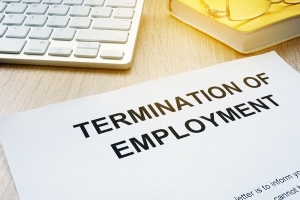
 Minnesota is known as an employment “at-will” state. This means that an employer can terminate an employee for any reason, or no reason at all. This “at-will” doctrine gives employers considerable discretion, and allows them to terminate an employee for what may seem like unreasonable and irrational reasons. For example, let’s say your employer terminates you for walking into work one day with a Pepsi because he has an unofficial Coca-Cola-only policy. While this is not a great business practice, there is nothing wrongful or illegal about this termination.
Wage Theft
Even as news of an improving economy has spurred job growth, it appears that many workers (especially low-wage workers) must fight for the wages they are entitled under law. Minnesota Public Radio recently reported that janitors for Diversified Maintenance Systems reached a settlement in a class action lawsuit filed against the company over unpaid wages.
The class, which included 250 janitors who were assigned to clean Target stores in the Twin Cities metro area, alleged that they were required to work nearly eighty hours per week, but were not paid appropriately. Under Minnesota law, hourly workers are to be paid-and-a-half for any hours worked in excess of 40 hours in a five-day work week.
Interns who have worked for the athletic department at a small liberal arts school on the East Coast are pursuing a class action lawsuit, claiming that they have been underpaid by the college for their efforts.
The lead plaintiff says that he complained to top officials at the school in the human resources department about the perceived mistreatment of the interns.
Lund Boat Company (and its parent company, Brunswick Corporation) have agreed to pay nearly $300,000 to the federal government following a years-long investigation of hiring practices at a New York Mills, Minnesota, manufacturing facility.
The U.S. Department of Labor began investigating Lund’s manufacturing plant in rural Otter Tail County, Minnesota, back in 2007 following a series of complaints alleging that the company refused to hire qualified female workers at the facility. The USDOL investigation led to further inquiry by the Office of Federal Contract Compliance Programs and eventually resulted in the federal Office of Administrative Law Judges stepping in to address claims that Lund “systematically discriminated” against women seeking entry-level jobs at its factory.
You are likely aware that hourly employees are entitled to overtime pay for weeks during which they work more than 40 hours. Unfortunately, some employers seek out ways to get more than 40 hours of work from their employees without paying them overtime. One method employers attempt is miscategorizing an employee as a salary employee even then they should be paid hourly under the provisions of the Fair Labor Standards Act (FLSA).
Another method used by some employers is requiring that hourly employees work more than forty hours in a week but then insist that they do not report any overtime hours, sometimes threatening or engaging in negative employment actions if the hours are accurately reported. This method is part of the allegations made by the former nanny of Sharon Stone.
Two Minnesota companies have recently been accused by the federal government of employment discrimination.
Federal regulators first accused Cargill Inc. last month of discriminating on both race and gender grounds at its Arkansas turkey plant. The government claims that the company discriminated against thousands of entry-level workers at that plant.