PracticeArea_whistleblower-fca_756x375Why do we honor whistleblowers today?

We honor whistleblowers because we rely on them to expose corporate wrongdoing.

  • Whether insider employees, consumers or patients – whistleblowers see illegal conduct and do something about it.

We honor whistleblowers because they model integrity and courage.

  • Whistleblowers take a stand knowing that blowing the whistle is risky business and can come with great costs.

We honor whistleblowers because thinking about them may give us the audacity to call out wrongdoing where we see it.

  • Whistleblowers remind us that taking a stand can have a tremendous positive impact on the interdependent communities in which we live and work.

And so—we honor whistleblowers today to thank them, and pledge our support of their efforts. But most important, we honor whistleblowers in hopes their example will inspire us to speak out against corporate wrongdoing and injustice.

Truth never damages a cause that is just.” Gandhi

Susan Coler
Halunen Law
July 30, 2021

A studio portrait of attorney, Susan Coler. She has short white hair, glasses, and wears a black suit. A Partner at Halunen Law, Susan Coler is a member of the Halunen Law False Claims Act (FCA)/Whistleblower Practice Group. She represents whistleblowers who challenge illegal corporate conduct, particularly fraud against the government. As an MSBA Labor and Employment Law Specialist, Susan has also brought successful retaliation claims in connection with FCA/qui tam cases and as stand-alone actions.

HL Scales of JusticeIn recent The Globe article, courageous employee reflects on actions that led to employer’s 14-count conviction.

Whistleblower Jen Erikson knew something was amiss at her place of employment. Witnessing the business practices at Caring and Compassionate Healthcare Agency (CCHCA), she realized things didn’t add up. She started digging deeper and discovered systemic fraud taking place in the company’s Medicaid billing. Erickson contacted Halunen Law, and attorneys Susan Coler and Nathaniel Smith felt a case could be made under the False Claims Act. Read a full recounting of this story by The Globe , as Erickson reflects on the steps she took to put a stop to the theft of taxpayer dollars, the victimization of the already vulnerable people CCHCA served, and the eventual conviction of her employer.

On June 24, 2021, Ms. Brown was sentenced to nearly 8 years in prison and ordered to pay restitution of more than $1.8 million.

You can also read more in the Star Tribune article: “Former SW Minnesota care agency operator sentenced to nearly 8 years for cheating Medicaid out of $1.8M

Halunen Law – Avoiding Orange Jumpsuit Worldwide Corporate FraudMINNEAPOLIS (May 13, 2021) – On the evening of May 11, 2021, a jury in southwestern Minnesota rendered a guilty verdict against Remona Lysa Brown on 14 felony counts of aiding and abetting healthcare fraud during her tenure leading the Caring and Compassionate Healthcare Agency LLC (CCHCA) in Worthington Minnesota.

The jury found that Brown submitted fraudulent claims to Minnesota’s Medicaid program for home care health services in amounts exceeding $1.8 million, for which restitution is sought.

The case began when a civil False Claims Act (FCA) lawsuit was filed by Halunen Law on behalf of a former employee and former client of CCHCA. These whistleblowers, called Relators in the FCA civil case, identified suspicious billing activity related to the private duty nursing services being provided by the agency.

They compared hours the employee actually worked to the Explanation of Medical Benefits (EOMB) received by the client from the Minnesota Department of Human Services for what was being billed and discovered that CCHCA and Brown were falsely billing for many more hours than were worked.

After the civil FCA lawsuit was filed, which is still pending in Minnesota federal court, and lengthy investigation, the Minnesota Attorney General’s Office chose to move forward with criminal charges against Brown.

The investigation found not only evidence supporting the allegations brought in the civil FCA suit, but also identified additional persons for whom Brown and CCHCA were fraudulently billing Medicaid.

Besides overbilling and billing for services never provided, the investigation found that CCHCA billed services provided by Licensed Practical Nurses and Personal Care Assistants as though they were being provided by Registered Nurses, resulting in higher payments than warranted.

“When it became clear to me that an injustice was happening, I knew I had to do something. In the medical field, we pledge to do no harm and it was horrifying to know that these people were being taken advantage of in their most vulnerable state.

I am so grateful to Halunen Law for listening to our story and taking the right measures so true justice could be served. I never thought I would be a whistleblower, but unless people bring attention to the wrongs in the world, they will persist. I encourage anyone who is witnessing fraud to come forward.” said Jen Erikson, the whistleblower in the case.

Both FCA Relators testified as witnesses in Brown’s criminal trial.  Their testimony and the additional evidence put forth by the State ultimately resulted in the conviction of Brown on all charges. On June 24, 2021, Brown was sentenced to almost 8 years in prison and order to repay over $1.8 million in restitution.

“The jury’s verdict gives us great satisfaction. Our clients started their civil FCA case with the goal of stopping healthcare companies who prey on their most vulnerable clients by using them to commit fraud against the government,” said Nathaniel Smith, an attorney with Halunen Law. “Thanks to their willingness to shine a light on CCHCA’s conduct and the work of the Minnesota Attorney General’s Office in successfully prosecuting this case through a jury verdict, their goal was achieved. The actions of these two courageous whistleblowers made a difference.”

Further details of the case can be found under court file number 53-cr-17-852.

Read more in the Star Tribune article: “Former SW Minnesota care agency operator sentenced to nearly 8 years for cheating Medicaid out of $1.8M

About Halunen Law

With offices in Minneapolis, Chicago, and Phoenix, Halunen Law offers experienced legal representation to employees, whistleblowers, and those who have been wrongfully injured. Halunen Law has achieved a reputation as a fearless, tenacious, and successful plaintiffs’ law firm, with a laser focus on achieving justice for its clients. For more information visit halunenlaw.com.

If you feel you’ve experienced illegal action in your workplace, we encourage you to submit a Case Review Form to our firm. One of our attorneys will review your information, and you’ll receive a response from our firm in a timely manner. There is no charge for this confidential process. And, if we take your case, as a contingency-based law firm, there is no cost unless we win.

We’re here to help you navigate your lawful rights and ensure you get the treatment you deserve. Together, we can hold employers accountable and create a fairer workplace for everyone.

red-whistle-headA recent decision out the 6th Circuit reinforces that former employees are protected from retaliation under the False Claims Act – even when the retaliatory conduct happens after they are fired or leave the company.

In the lawsuit, an employee alleged he was “marginalized” for insisting on compliance with the law during his employment and then “blacklisted” in his industry after being fired. He filed an FCA case that the hospital where he had been working was providing illegal kickbacks to physicians in exchange for referrals – conduct that would clearly violate the False Claims Act. The employee applied to nearly 40 different companies and alleged the hospital’s retaliatory conduct kept him from successfully securing new employment.

The anti-retaliation provision of the FCA provides that any employee, contractor, or agent shall be entitled to all the relief necessary to make them whole if they are a) discharged, b) demoted, c) suspended, 4) threatened, 5) harassed, or 6) in any other manner discriminated against regarding the terms and conditions of their employment for acts done to stop violations of the FCA.

According to the 6th Circuit, these protections are broad and far-reaching – even so far as to reach former employees: “the anti-retaliation provision of the FCA may be invoked by a former employee for post-termination retaliation by a former employer.”

In making the decision, the Court noted that the purpose of the FCA’s anti-retaliation provision is to encourage the reporting of fraud and facilitate the federal government’s ability to stop fraudulent conduct by protecting those who assist in its discovery and prosecution. The Court further said: “If employers can simply threaten, harass, and discriminate against employees without repercussion as long as they fire them first, potential whistleblowers could be dissuaded from reporting fraud against the government.”

Employees are entitled to significant damages when their employees retaliate against them in violation of the FCA. In fact, they are “entitled to all relief necessary to make that employee whole.” Most notably, and unlike many other employee protections, current and former employees may receive double back-pay damages under the FCA. This amount can be large, especially when an underlying FCA case may go on for years while the government litigates the matter. Employees may also be entitled to reinstatement, front pay, emotional distress, other special damages, and their attorneys’ fees and costs.

The 6th Circuit decision is controlling authority in the states of Michigan, Ohio, Kentucky, and Tennessee. The 10th Circuit has ruled that the FCA does not cover former employees. This ruling applies in Oklahoma, Kansas, New Mexico, Colorado, Wyoming, and Utah. Other circuits have not yet taken a position on this issue, but this new ruling will make the argument more compelling in circuits that haven’t yet decided.

For many current or former employees facing retaliation after reporting fraudulent conduct or insisting that their employer follow the law, their rights are now more strongly protected. If this situation applies to you, you should contact an experienced attorney with deep knowledge of the False Claims Act and employment law. At Halunen Law we have both.

Download a PDF of the 6th Circuit Decision

NathanielS-headshot-300×300Having recovered millions of dollars on behalf of whistleblowers in both employment retaliation cases and qui tam whistleblower lawsuits under the False Claims Act (FCA), attorney Nathaniel F. Smith is relentless in his pursuit of justice.

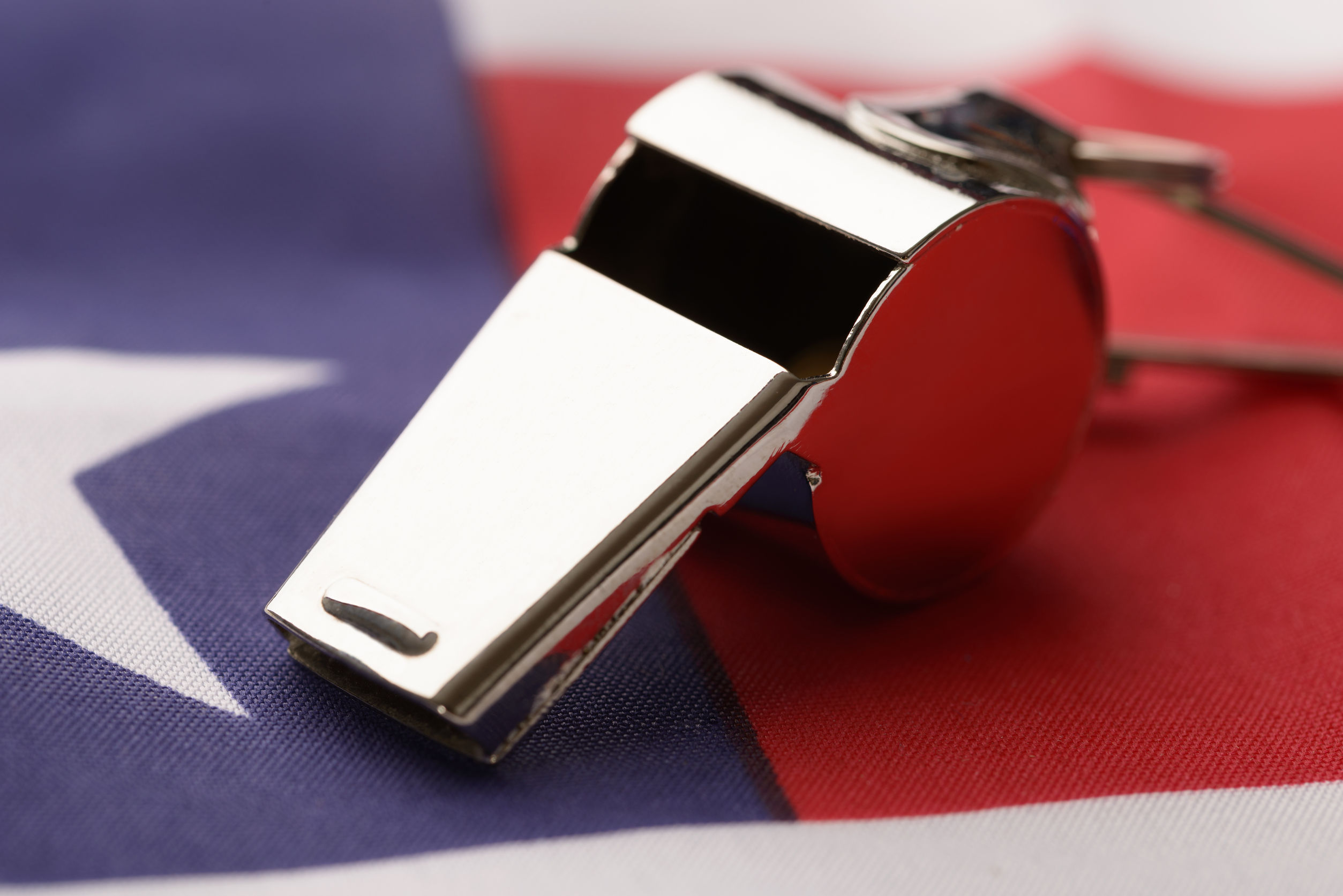
Whistle On American FlagThe Department of Justice’s 2020 data is here, and it paints another compelling picture of the value brought by whistleblowers who file cases under the False Claims Act (FCA). In 2020, claims filed by whistleblowers were responsible for about 75% of new cases filed and about 75% of government fraud proceeds. And rewards made to whistleblowers in 2020 averaged about 18% of the proceeds collected by the government.

These conclusions are the results of DOJ’s annual collection and publication of data about the year’s filings under the FCA, as well as the amounts collected by the government. DOJ recently published the data for 2020 in a spreadsheet that provides information dating back to 1986, when the FCA was significantly strengthened. The data presents total filings, filings related to the Department of Health and Human Services, filings related to the Department of Defense, and all other filings.

What does the data show?

The 2020 data shows that whistleblowers played a critical role in prosecuting fraud against the government:

  • Whistleblowers filed 672 new qui tam cases, compared to 250 new cases filed by the government, for a total of 902 new cases.
  • Prior cases filed by whistleblowers resolved in 2020 yielded $1.68 billion compared to $545 million resulting from government-filed cases for a total of $2.31 billion collected under the FCA.
  • Whistleblower rewards amounted to more than $300 million.

The 2020 data shows that fraud related to health care led the pack for both new cases and recoveries:

  • 68% of new qui tam cases related to health care fraud.
  • 5% of new qui tam cases related to Department of Defense fraud.
  • 27% of new qui tam cases related to other kinds of fraud against the government.
  • 5% of recoveries related to health care fraud (note: this data does not include state recoveries for Medicaid fraud, which are also extensive).
  • 6% of recoveries related to Department of Defense fraud.
  • 9% of recoveries related to other kinds of fraud against the government.

The 2020 data shows that fraud has many, many faces.

The Department of Justice press release regarding 2020 data provides an overview of significant cases for the year. It highlights illegal kickbacks for drug and medical device prescribers, illegal payment of co-pays for expensive drugs, opioid-related cases, bid-rigging, bribery, and providing false information related to government purchases. Within health care alone, fraud encompasses a vast gamut of cases ranging from pharmaceuticals and medical devices to managed care providers, hospitals, pharmacies, hospices, laboratories, and physicians, and includes Medicare, Tricare, and VA claims. Other kinds of fraud include claims involving departments or agencies unrelated to HHS or DoD, e.g., energy, agriculture, the Federal Emergency Management Agency, commerce, the National Institutes of Health, and housing.

The Government values Qui tam whistleblowers.

The DOJ press release releasing the 2020 FCA data acknowledged the vital role played by whistleblowers in these recoveries:

Whistleblowers with insider information are critical to identifying and pursuing new and evolving fraud schemes that might otherwise remain undetected. These individuals often make substantial sacrifices to bring these schemes to light, and our efforts to protect taxpayer funds continue to benefit from their actions.

Whistleblowers cannot file FCA cases on their own. Because government interests are at stake, courts require whistleblowers to be represented by an attorney who can navigate these complex cases, including the interpretation of statutes and regulations that can be challenging to understand. Attorneys with FCA experience can also effectively interact with DOJ attorneys, actively assist the government, and effectively multiply the DOJ’s limited resources.

The 2020 data shows the tremendous contribution whistleblowers make when they file qui tam FCA cases. Whistleblowers protect taxpayer dollars and protect others from the harm caused by fraud. The government’s interests in prosecuting FCA cases and the potential rewards available to whistleblowers warrant taking action and consulting with an FCA attorney when an individual has knowledge of fraud against the government in any of its many forms.

Review the fraud statistics provided by the U.S. Department of Justice, Civil Division

Read the Press Release: Justice Department Recovers Over $2.2 Billion from False Claims Act Cases in Fiscal Year 2020

A Partner at Halunen Law, Susan Coler is a member of the Halunen Law False Claims Act (FCA)/Whistleblower Practice Group, a team of attorneys solely dedicated to litigating False CLaims Act and other whistleblower cases across the country. Susan represented a relator in an FCA claim against Abbott Laboratories that resulted in a civil settlement of $800 million (total settlement of $1.5 billion), the fifth-largest civil healthcare recovery ever achieved under the FCA. Learn more.

Photo G-Garden StateNewark, NJ, December 4, 2020. A lawsuit filed by former employees of NY Waterway, which operates ferry vessels between New York and New Jersey, claims the company illegally dumped raw sewage, oil, fuel, coolant and other pollutants into New York harbor and surrounding waters for years while operating a fleet of 30 vessels that carry up to 30,000 passengers a day.

See the recent NY Times article.

Download the Amended Complaint.

In a recently unsealed complaint filed in the United States District Court of New Jersey, former NY Waterway fuelers and overnight mechanics Rafi Khatcikian and Ivan Torres allege that the company knowingly and intentionally forced them to discharge hundreds of gallons of liquid pollutants as well as batteries and aluminum shavings into the Hudson River, East River, Upper New York Bay, Lower New York Bay and Raritan Bay.

The complaint alleges that NY Waterway, under contract to the City of New York and Goldman Sachs, dismissed the concerns and complaints of the plaintiffs in order to cut costs, boost profits and remain on schedule. The company allegedly failed to maintain equipment designed to safely dispose of the pollutants and regularly told the plaintiffs to “get the job done” and lie about the illegal practices if asked, according to the suit. Both were threatened with termination if they took their concerns to management, and ultimately Khatcikian was fired for doing so, the complaint alleges.

“These brave defenders of the public interest are admitting their own wrongdoing in order to stop NY Waterway from further polluting the harbor and other local commercial and recreational waters,” said Michael D. Fitzgerald, co-counsel for plaintiffs. “They lost their jobs because of NY Waterway’s illegal practices, and then decided to put the interests of 15 million residents over their own futures. They are true environmental heroes.”
NY Waterway, EPA’s Green Dye Spotted 10-03-2018 at 04.22.53 (adjusted)According to the complaint, videos and photographs taken by the former employees show workers dumping sewage through a hose thrown over the side of ferries and illegally dumping it directly into the Hudson River from the holding tanks. In one video, dye provided by the EPA to track the pollution is shown billowing across the river as employees scramble to disperse the evidence by stopping and starting engines at the dock. The ferry depicted in the video was taken out of service and its GPS device turned off before being moved to a New York-based dock, the lawsuit alleges.

The complaint alleges that when the EPA returned a few weeks later, the bathrooms on ferries under investigation were either locked or removed entirely. The removal of the bathrooms allegedly took place just days after NY Waterway received notice of Clean Water Act violations.

“NY cynically put out-of-order signs on bathrooms and even removed toilets once they learn they were being watched,” said Fitzgerald.

The complaint further claims that NY Waterway’s ferries engaged in the act of “running open,” an illegal practice where ferries would discharge their holding tanks while sailing between destinations. NY Waterway allegedly also delayed repairs of equipment and cooling systems until it knew federal inspectors were due, causing hundreds and hundreds of gallons of toxic waste to pollute the river and surrounding waters daily. Gerald Robinson, a Halunen Law attorney who also represents the plaintiffs, commented: “this case was brought under environmental laws allowing citizens’ suits, as well as the False Claims Act, showing the critical role that whistleblowers play in eliminating environmental injustice.”

According to the lawsuit, NY Waterway and affiliated companies improperly received approximately $9.6 million from federal and state agencies since 2015, including from the Department of Transportation, Federal Highway Administration, Federal Maritime Administration, Federal Emergency Management Agency and New Jersey Transit. NY Waterway unlawfully certified it was in compliance with all environmental laws in order to receive the money despite knowingly and illegally discharging pollutants every day, the complaint alleges.

About the Law Office of Michael D. Fitzgerald: The Law Office of Michael D. Fitzgerald is dedicated to those who have taken up the individual challenge and have committed themselves to reporting fraud and waste. Based in New Jersey, The Law Office of Michael D. Fitzgerald handles various employment related matters related to whistleblower issues including False Claims Act and Qui Tam matters.

About Halunen Law: With offices in Minneapolis, Chicago and Phoenix, Halunen Law offers experienced legal representation to employees, whistleblowers, and those who have been wrongfully injured. Halunen Law has achieved a reputation as a fearless, tenacious and successful plaintiffs’ law firm, with a laser focus on achieving justice for its clients. For more information visit halunenlaw.com.

If you feel you’ve experienced illegal action in your workplace, we encourage you to submit a Case Review Form to our firm. One of our attorneys will review your information, and you’ll receive a response from our firm in a timely manner. There is no charge for this confidential process. And, if we take your case, as a contingency-based law firm, there is no cost unless we win.

We’re here to help you navigate your lawful rights and ensure you get the treatment you deserve. Together, we can hold employers accountable and create a fairer workplace for everyone.

Here are some things you should know before stepping forward as a whistleblower.

1. Whistleblowing can be a challenging and lengthy process

Whistleblower cases often take years, and the consequences of blowing the whistle can upend your life and that of your family. Your integrity can be attacked, your reputation can be smeared, your livelihood can be impacted, and your employability can be adversely affected. Laws exist to protect, reward, and vindicate whistleblowers, but litigating under those laws and enforcing your rights is a challenge as well.

2. Whistleblowing can be a rewarding, fulfilling process

Nothing’s worth having if it’s not worth a fight. Whistleblowing can be immensely rewarding, even though sometimes difficult. Whistleblowers are often driven by a devotion to courage, a desire for a clear conscience, and concern for the public good. Financial rewards may be available to compensate whistleblowers for their efforts and injustices. And even when whistleblower cases do not result in a financial reward, they often bring about improvements and important changes in the offending company’s behavior. They also allow whistleblowers to sleep peacefully at night and look in the mirror without regret, knowing they did their part in uncovering and pointing government officials to misconduct that harms all of us.

3. There are several whistleblowing statutes, not one, all-encompassing law

More than 50 federal laws and a myriad of state and local laws protect whistleblowers from retaliation. Your rights and level of protection depend on the type of misconduct you are reporting, the procedures of the law(s) most applicable to you, what you disclose, when, and to whom. Before making the call, learn about which law fits your situation and gives you the fullest possible protection. The best way to do that is to talk with an experienced False Claims Act / qui tam attorney.

4. Public agencies and public policy endorse whistleblowing

Federal and many state legislatures recognize the vital contributions whistleblowers make in detecting corporate crimes and have enacted anti-retaliation and reward statutes. Many government agencies have special agencies to investigate reports by whistleblowers. Don’t rely on media stereotypes. Those who understand the importance of rooting out illegal conduct, understand that the courage of individuals like you is critical to the well-being of our communities. That is why laws exist to protect you.

5. Do not expect to remain anonymous

Some whistleblower statutes allow you to keep your identity secret indefinitely. Others, like the federal FCA and many state counterparts, begin with the case under seal, or not publicly available, for a period of time. However, the case will eventually be unsealed.  And sometimes companies under investigation can figure out a whistleblower’s identity by the nature of events underlying the case or by the kinds of information the government requests. In nearly every case, the case becomes unsealed, or publicly available, after the government notifies the court whether it will intervene. In short, prepare to be identified as a whistleblower.

The decision to become a whistleblower is a personal one that only you can make. Contact an experienced whistleblower attorney at Halunen Law for a free consultation to discuss the rewards and risks of a whistleblower case to help you decide.

NathanielS-headshot-300×300As an attorney with Halunen Law’s FCA Practice Group, Nathaniel Smith is determined to bring fraudulent conduct to light, and to justice. Having recovered millions on behalf of whistleblowers in both employment retaliation cases and qui tam whistleblower lawsuits under the False Claims Act (FCA), he is relentless in his pursuit. Learn more about Nathaniel F. Smith.

red-whistle-headIf you suspect that your employer or some other entity is committing fraud against the government, here are some things you can do to increase your chances of bringing a successful False Claims Act case.

1. Act quickly

Quick action serves the important purpose of stopping the fraud and the harm it is causing. In addition, every legal claim has a corresponding limitations period within which to pursue a claim. Those time limits vary depending on the law and the circumstances. If you wait too long, you may lose your right to bring a whistleblower case.

2. Retain and work with an experienced attorney

You must be represented by counsel to bring a False Claims Act case, and in any event, having an experienced attorney is crucial to the success of your case. It is also affordable. Halunen Law provides free consultations and represents whistleblowers on a contingency basis, which means our clients pay us a fee only if the case results in a recovery. To successfully bring a False Claims Act case, you need a law firm that knows the following: how to put your facts into a compelling narrative; how the government will evaluate and investigate your allegations; how to persuade the government your case has merit; how to help the government put together the case; and how to litigate the case on your behalf if the government decides not to. As the person best situated to provide relevant facts, your participation and cooperation in this process are vital and can impact any reward.

3.  Document the fraud promptly and properly

Successful False Claims Act cases are based on evidence, not speculation, hunches, or guesswork. Documenting the fraud or misconduct is an important way to strengthen the merits of your whistleblowing and the government attention it receives. But determining how to do so—such as what documents you are permitted to take, how you may or should access them, and whether you may secretly record conversations—present tricky situations that depend on complex legal and factual considerations. If you navigate these legal traps incorrectly, you can jeopardize your case and your rights or, even worse, end up violating the law yourself.

4. Report the fraud

In many cases, reporting the fraud can strengthen a False Claims Act case. But knowing how, when, and to whom you should report depends on the situation and should be discussed with an experienced attorney. Sometimes companies have reporting procedures or policies that provide information regarding what to include and to whom you should report, such as a manager, human resources, the legal department, compliance, or even a whistleblowing helpline. Other reports may be advisable depending on the circumstances.

5. Discuss your whistleblower efforts or intentions only with your attorney

Loose lips sink ships—and whistleblower cases. Under the “first-to-file” bar, the federal False Claims Act typically limits recovery to the first person to file a lawsuit. You may also be limited or barred from recovering an award if, before you file suit, someone else publicizes or brings the fraud to the government’s attention. Similar limitations may apply under state law. In other words, if you say too much to too many people, you can jeopardize (or lose altogether) your right to bring or receive an award in a False Claims Act case.

6. Be patient

It takes time to put together a False Claims Act case and present it to the government. And then, it will likely take the government much longer to investigate your allegations, compile evidence, persuade a company to settle, or litigate a case. Delays, extensions, and other frustrations are common in False Claims Act cases. Allow the process to run its course, and do not expect a quick resolution. However, once you have provided your facts to the government in a well-constructed False Claims Act claim, you will have the immediate satisfaction of knowing that you have done what you can do to bring the illegal conduct to the government’s attention.

For all of these reasons and others, contact an experienced whistleblower attorney at Halunen Law for a free consultation as soon as you become aware of conduct that may involve fraud against the government. That first step will give you peace of mind and important advice as to next steps.

LonL-600×600-300×300Lon Leavitt joined Halunen Law after a successful 12-year tenure as an Assistant United States Attorney in the District of Arizona, one of the largest and busiest federal districts in the country. In that role, he managed False Claims Act investigations and litigation on behalf of the federal government in a wide range of fields, including health care, defense and education. Lon is especially knowledgeable in health care fraud enforcement, having pursued cases successfully against hospitals, hospices, physician groups, and other health care providers. Learn more about Lon Leavitt and his work at Halunen Law.

Photo of a tall stack of documents with a warmly colored background.It is unusual for any plaintiff or relator to achieve a summary judgment ruling in its favor in any type of case. But in U.S. v. Dynamic Visions Inc., DBA Dynamic Visions Home Health Services, et al., — F.3d —, 2020 WL 4914069 (D.C. Cir. Aug. 21, 2020), the D.C. Circuit affirmed such a ruling in a False Claims Act (FCA) case, alleging that a home health care company submitted false claims for reimbursement to the D.C. Medicaid program. The Circuit’s opinion shows how a relator can succeed on summary judgment and provides other useful discussions on evidence, civil contempt, piercing the corporate veil, and the proper calculation of damages in a Medicaid FCA case.

The defendant, Dynamic Visions, utterly failed a routine government audit of its operations. A review of 25 randomly selected patient files revealed a lack of the required “Plan of Care” (POC) for patients. The files either contained no POC or had deficient POCs (e.g. lacked a physician signature, contained untimely or forged signatures, or authorized fewer hours of care than claimed in bills to Medicaid). Id. at *1. The federal government executed a search warrant at the business and the residence of the owner and company president, Isaiah Bongam. The ensuing investigation revealed Bongam’s funneling of money from the company into private accounts (including offshore in Cameroon). Id. at *2.

The government brought an action against Dynamic Visions and Bongam alleging FCA violations, and its complaint listed false billings for 25 patients that were not authorized by a valid POC. The defendants failed to cooperate in discovery, particularly in providing evidence that the patients had valid POCs, and claimed that the government had seized their documents, even though they had been given a disc containing searchable PDFs of all relevant documents. Id. at *2.

Because defendants produced no documents showing valid POCs for these patients, the government moved for summary judgment. When the defendants failed to challenge the government’s statement of facts, the court granted the motion. The defendants appealed. Id.

The D.C. Circuit affirmed, except it vacated a small subset of claims involving POCs that the government claimed were forged, and for which it found questions of fact remained. Id. at *3. Most useful in the opinion is the panel’s discussion of the sufficiency of the evidence showing—“beyond genuine dispute”—the knowing submission of false claims.

The government provided evidence showing how each file lacked the proper authorization. In response, the defendants offered only conclusory allegations that the files were adequately documented and generally referenced how they followed policies and procedures. The Circuit found that the defendants provided nothing on which a jury could decide in their favor; they did not even provide the claimed policy and procedure manual they referenced in their conclusory defenses. Focusing on the available “reckless disregard” standard for falsity, the opinion affirms the district court’s conclusion that  “‘even a cursory review’ of the files would have revealed the ‘rampant’ false claims,” thereby justifying summary judgment at least on reckless disregard grounds. See 31 U.S.C. § 3729(b)(1)(A)(iii). Id. at *4-5. Rejecting the defendants’ arguments that scienter could not be pieced together, the Court stated there was no need to aggregate individual knowledge because “any single person who looked at the patient files should have known that the company sought reimbursements unsupported by adequate POCs.” Id. at *5.

Practitioners may also find these additional discussions useful:

Civil Contempt: Citing a two-year history of discovery non-compliance, the Court affirmed the imposition of a contempt finding against defendants, precluding them from presenting evidence in their summary judgment opposition that they did not already produce in discovery. Id. at *6.

Piercing Corporate Veil: Besides evidence of a “unity of interest between the individual and the entity,” the opinion affirmed the district court’s conclusion that Bongam’s transfer of large sums of money to his personal accounts was compelling justification to pierce the corporate veil. This was particularly so because insulating the owner from liability here would be unjust. Id.

Damages and the Federal Share of Medicaid: The Circuit sent back the damages calculations because the district court had awarded damages based on the full amount of the unauthorized reimbursements, rather than the 70% share paid by the federal government. Id. at *7.

The defendant here may have had “dynamic visions” for its home health agency, but its failure to follow even basic protocols regrettably led it into the dark tunnel of FCA liability. The take-away for practitioners is the viability of relying on reckless disregard as a basis for seeking summary judgment on a proactive basis and the type of evidence that can result in success.

SusanC-headshot-300×300A Partner at Halunen Law, Susan Coler represents whistleblowers across the United States in many different industries who challenge illegal corporate conduct, including fraud against the government. As a Labor and Employment Law Specialist, Susan has also brought successful retaliation claims in connection with False Claims Act (FCA) /qui tam cases and as stand-alone actions. Learn more.
If you are a Minnesota employer that uses criminal background checks when making hiring decisions, the Equal Employment Opportunity Commission wants you to rethink how you use those checks in the hiring process. The EEOC issued new guidelines that although are not ‘legally binding’ they will be used by the EEOC when it enforces claims of employment discrimination.

The goal of the new EEOC guidelines is to encourage employers to consider the impact a past criminal record could have on the job being applied for. It only wants an employer to ask about the criminal history of an applicant when it affects the job itself. An example could be an applicant’s conviction on embezzlement charges that could disqualify that applicant from a position that entails any fiduciary responsibilities.

Read More…

© 2026 Halunen Law | Minneapolis Employment Attorneys