Each of us is more than the sum of our parts. No single characteristic defines us; rather, we are an amalgamation of different traits, inclinations, experiences and perspectives.

Female doctor looks over medical record for upcoming appointment

For some people, their unique combination of biology and background means they’re members of more than one class that the law protects from workplace discrimination and harassment. A Black woman can experience prohibited discrimination premised on her race and her gender. A gay Jewish man may be the victim of harassment and abuse because of his religion and sexual orientation. 

Known as “intersectional discrimination,” this type of workplace conduct is widespread and increasingly recognized by courts as the basis for claims under Title VII of the Civil Rights Act of 1964 and other federal and state anti-discrimination laws. When the claim involves discrimination against a woman because of her gender and membership in another protected class, it’s sometimes called a “sex-plus” claim. And when age is the other asserted basis for an employer’s discriminatory actions (e.g., a woman in her 50s who’s terminated because of her sex plus her age), that’s ”gendered ageism.” It’s illegal, and can be the basis of a claim for compensation and other relief.

Intersectional Discrimination Defined and Recognized

The analytical framework for intersectional discrimination was popularized by Black legal scholar Kimberlé Crenshaw, who argued that “different forms of inequality […] operate together and exacerbate each other.” The Center for Intersectional Justice describes intersectionality as:

“The ways in which systems of inequality based on gender, race, ethnicity, sexual orientation, gender identity, disability, class and other forms of discrimination “intersect” to create unique dynamics and effects. For example, when a Muslim woman wearing the Hijab is being discriminated, it would be impossible to dissociate her female from her Muslim identity and to isolate the dimension(s) causing her discrimination.”

Over the past two decades, many federal and state courts have repeatedly recognized and allowed intersectional discrimination and harassment claims to proceed as employment claims when employees experienced disparate treatment because of their membership in more than one protected class. As one federal court noted, “Some characteristics, such as race, color, and national origin, often fuse inextricably. Made flesh in a person, they indivisibly intermingle. Title VII prohibits employment discrimination based on any of the named characteristics, whether individually or in combination.”

Sex-Plus-Age Discrimination Claims

Many cases that recognize intersectional discrimination involve older female workers who claim they suffered adverse employment actions based on their gender and ages. Many state laws, including the Minnesota Human Rights Act, prohibit both age and gender discrimination. While “age” isn’t a protected class under Title VII, the federal Age Discrimination in Employment Act of 1967 (ADEA) prohibits age-based discrimination in the workplace, making a gendered ageism case viable under federal law as well. 

Despite its illegality, workplace age discrimination is rampant in a business, societal, and technological culture that often venerates youth over experience. Approximately 453,000 American workers filed age discrimination claims with the Equal Employment Opportunity Commission between 1997 and 2020, while about one in five workers over age 40 and one in four workers over age 60 believe they have experienced age discrimination in the workplace, according to a Senior Living survey. 

While men and women can experience age-based discrimination, studies have shown that it disproportionally affects female workers, especially women of color. A 2023 analysis of gendered ageism in the workplace noted that: 

Age discrimination is not equal; ageism tends to be gendered. … Studies exploring the well-being of working women have indicated that women are more likely to be victimized by all forms of discrimination, including ageism. In one study of 6,642 women over 18, 63% of those over 50 stated that they were discriminated against. Women, particularly women of color, are further subjected to the intersecting prejudices of age, ethnicity, and gender bias.” (citations omitted)

A 2020 federal appellate decision illustrates how courts recognize and treat sex-plus-age discrimination claims. In Frappied v. Affinity Gaming Black Hawk, LLC, the plaintiffs brought claims under Title VII and the ADEA, alleging their employer terminated them based on their ages and gender. Reversing the trial court’s dismissal of their claims, the appellate court held that “sex-plus-age claims are cognizable under Title VII,” noting that “Ample precedent holds that Title VII forbids ‘sex-plus’ discrimination in cases in which the ‘plus-  characteristic is not itself protected under the statute.” 

The court thus concluded that: 

“Intersectional discrimination against older women is a form of discrimination based on sex stereotypes that Title VII was intended to prohibit. And discrimination against older women that does not target older men is a form of sex discrimination.”

Whether based on one protected trait or a combination of characteristics, workplace discrimination is illegal. It unfairly deprives qualified individuals of opportunities or subjects them to hurtful and demeaning behavior or comments. No one should have to abide by or endure such treatment.

If you feel you’ve experienced illegal action in your workplace, we encourage you to submit a Case Review Form to our firm. One of our attorneys will review your information, and you’ll receive a response from our firm in a timely manner. There is no charge for this confidential process. And, if we take your case, as a contingency-based law firm, there is no cost unless we win.

We’re here to help you navigate your lawful rights and ensure you get the treatment you deserve. Together, we can hold employers accountable and create a fairer workplace for everyone.
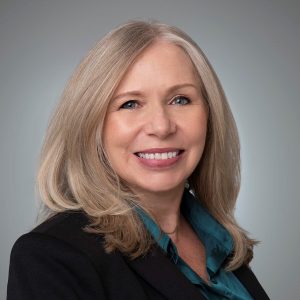
Pamela headshot

As a member of Halunen Law’s Employment Practice Group, Pamela Johnson brings an impressive reputation for advocacy and achievement. Her clients benefit from her breadth of experience, stellar track record, and exceptional insight. 

Firm wins Gold Award honors in Star Tribune statewide “Minnesota’s Best” Campaign 

MINNEAPOLIS, MN (September 25, 2022): Minneapolis-based Halunen Law received the distinct honor of being selected for the second consecutive year as a Gold Award Winner for its outstanding work in the legal field. In the 2022 Star Tribune “Minnesota’s Best” campaign, voters from across the state made their preferences known, and once again Halunen Law received the top-ranked status in the Employment Lawyer and Law Firm categories. 

“We’re grateful to all who took the time to vote for Halunen Law in the Star Tribune 2022 Minnesota’s Best campaign. Halunen’s team of talented attorneys and staff is fiercely dedicated to defending employees and courageous whistleblowers who come to us at some of the most challenging times in their lives. Our successful record demonstrates the deep expertise and commitment we bring to each case. We’re humbled by the trust our clients have put in us these past 24 years, and to receive the Minnesota’s Best Award for the second year in a row is very gratifying. We promise to continue to fight for what’s right and create consequential change in the process.”

About the “Minnesota’s Best” Campaign: With one of the highest daily readership numbers per capita of any media publication in the country, the Star Tribune put their considerable reach across the state to launch their inaugural “Best of Minnesota” campaign. The campaign asked residents to give their opinions on multiple categories, including Food and Drink, Legal, Entertainment, Health Care, Education, and much more. More than 750,000 total votes were tabulated in 2022, resulting in reflection and celebration of “Minnesota’s Best” businesses and services across the state.   

About Halunen Law: Founded in 1998 and with offices in Minneapolis, Chicago, and Phoenix, Halunen Law offers experienced legal representation to employees, whistleblowers, and consumers. Halunen Law has achieved a reputation as a fearless, tenacious, and successful plaintiffs’ law firm, with a laser focus on achieving justice for its clients. For more information, visit halunenlaw.com.

If you feel you’ve experienced illegal action in your workplace, we encourage you to submit a Case Review Form to our firm. One of our attorneys will review your information, and you’ll receive a response from our firm in a timely manner. There is no charge for this confidential process. And, if we take your case, as a contingency-based law firm, there is no cost unless we win.

We’re here to help you navigate your lawful rights and ensure you get the treatment you deserve. Together, we can hold employers accountable and create a fairer workplace for everyone.

Woman Telecommuting - Working From Home Taking Care of Baby

The landscape for workplaces is changing. As technology evolves, so too does the way we do our jobs.

Many people can (and do) work just as effectively at home as they do at work. And a recent court case said just that. It held that a telecommuting arrangement could be a reasonable accommodation for a person suffering from a disability. Click to read the case: E.E.O.C. v. Ford Motor Co., 12-2484, 2014 WL 1584674 (6th Cir. Apr. 22, 2014).

If you have a disability, you have a right to reasonable accommodation from your employer. In the case above, the plaintiff had a very bad case of Irritable Bowel Syndrome (IBS), and asked to work from home.

She argued that this would alleviate her IBS symptoms and that most of her work could be done via computer or telephone. Ford denied the request, stating that presence in the office was essential to her job. Ford instead offered other accommodations, such as putting her office closer to the bathroom, because it argued that she needed to interact with other team members and could only access information during “core” business hours.

Read More…

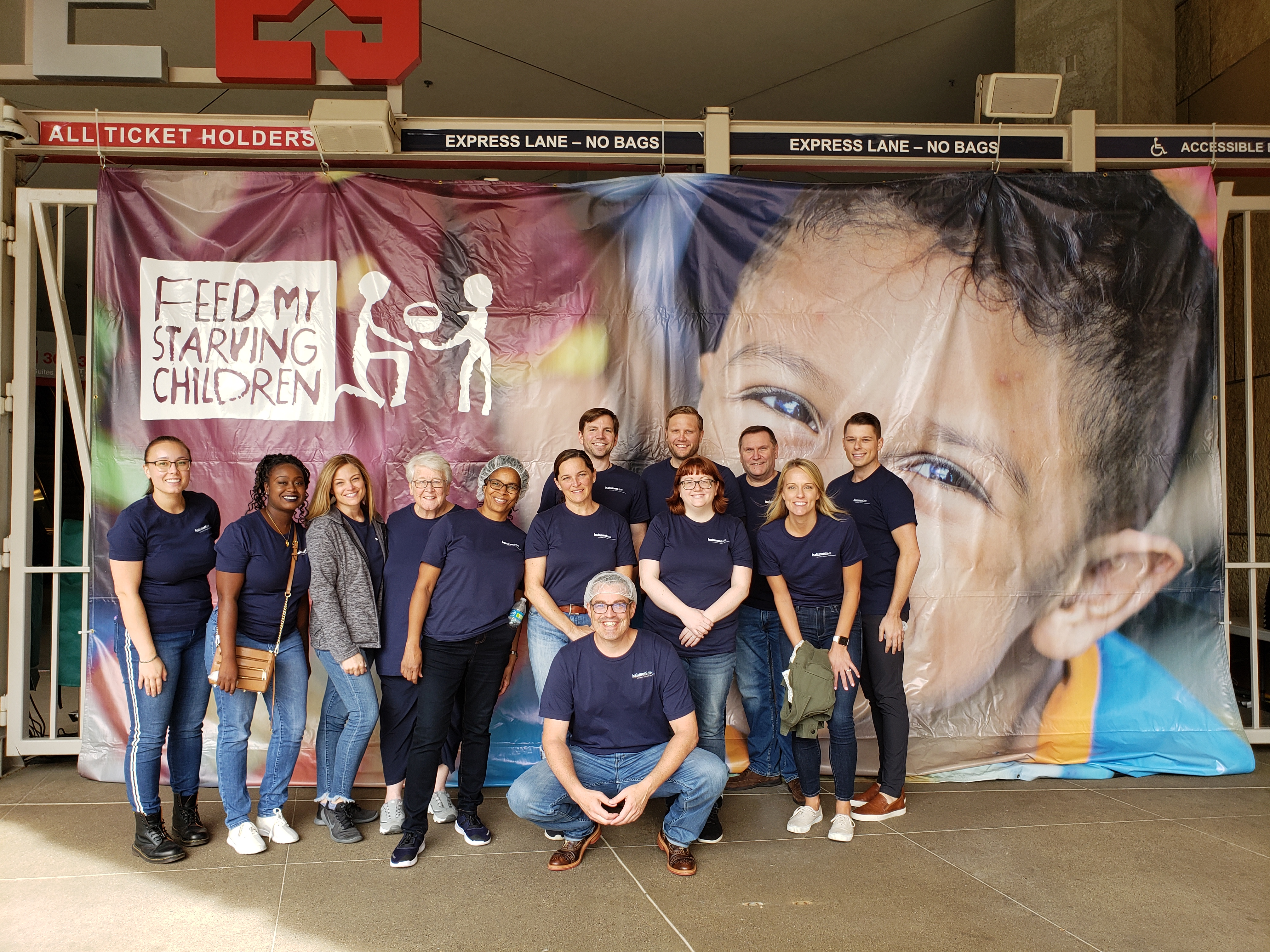
On September 26, Halunen Law joined the 3rd Annual Feed My Starving Children “Pack at the Park” event at Target Field. A full contingent of Halunen attorneys and staff joined 5,000 volunteers for this important event with a shared goal of providing 1 million meals to those in need. It was a fun and rewarding event for all involved.

Learn more about Feed My Starving Children and how you can help.

the Halunen Law team stand in front of a colorful banner reading "Feed My Starving Children" while wearing matching dark blue t-shirts. Smiling, the team greets the camera, ready for the FMSC event.Seated front: Chris Moreland; Center row: Karah VueBenson, Hillary Brown, Jennifer Vukelich-Seltz, Susan Coler, Cecilia Mazique, Erin Keefe, Meghan Hillenbrand, Amanda Crain; Back row: Nathanial Smith, Johnathan Stee, Karl Breitbarth, Blaine Balow.




A close cropped photo of the word "Justice" etched into the marble facade of a building.

 Carlson v. BNSF Railway Company

Halunen Law increased its winning appellate record for 2019 to 3-0, with the recent Carlson v. BNSF Railway Company decision. Partner Christopher Moreland was specially retained to litigate the appeal in this case and the win is particularly notable—the Court of Appeals reinstated a $207,333 jury award that a District Court had taken away.

On November 11, 2015, Jason Carlson was working as a conductor for the BNSF railroad when his employer assigned him to take a train from Minneapolis to Dilworth. What BNSF knew, but Carlson did not, is that the locomotive on his train was unsafe. Indeed, before assigning Carlson and his engineer to use that particular locomotive, the BNSF received reports from the previous operating crew that the toilet in its cab was leaking chemicals and human waste, thus dispersing noxious fumes throughout cab. When he boarded the locomotive and smelled the stench, Carslon again reported the engine as defective, but his bosses ignored him and sent the train on its way.

Throughout the trip, Carlson inhaled the dangerous fumes and, not surprisingly, became sick. Unfortunately, his illness proved to be long-lasting, and his doctors ultimately diagnosed him with irritant induced asthma and vocal cord dysfunction as a result of his exposure. Although Carlson was able to return to his conductor’s duties following the incident, his respiratory system had been permanently compromised, and he was forced to work a less demanding schedule, which, in turn, caused him to earn less money.

Carlson sued the BNSF in Hennepin County (Minnesota) District Court, and on October 9, 2017, the jury returned a verdict in his favor, concluding that BNSF was at fault for assigning Carlson to work on an unsafe locomotive and awarding Carlson damages, including $207,333.00 to compensate him for his loss of earning capacity (i.e., his reduced ability to earn due to his injuries). Once the trial was over, however, the BNSF filed a motion arguing that the evidence Carlson had presented at trial was not sufficient to support the jury’s verdict. The trial judge granted the BNSF’s motion and took away the $207,333 award for his loss of earning capacity.

Halunen Law to Challenge

After receiving the judge’s order, Carlson’s trial counsel hired Halunen Law to challenge it in the Minnesota Court of Appeals. On February 26, 2019, Halunen Law attorney Chris Moreland appeared before the court, arguing that the trial judge had invaded the province of the jury and wrongly took away its verdict.[1] On May 20, 2019, the Minnesota Court of Appeals issued its opinion reversing the trial judge’s order and reinstated the jury’s award in favor of Carlson.[2]

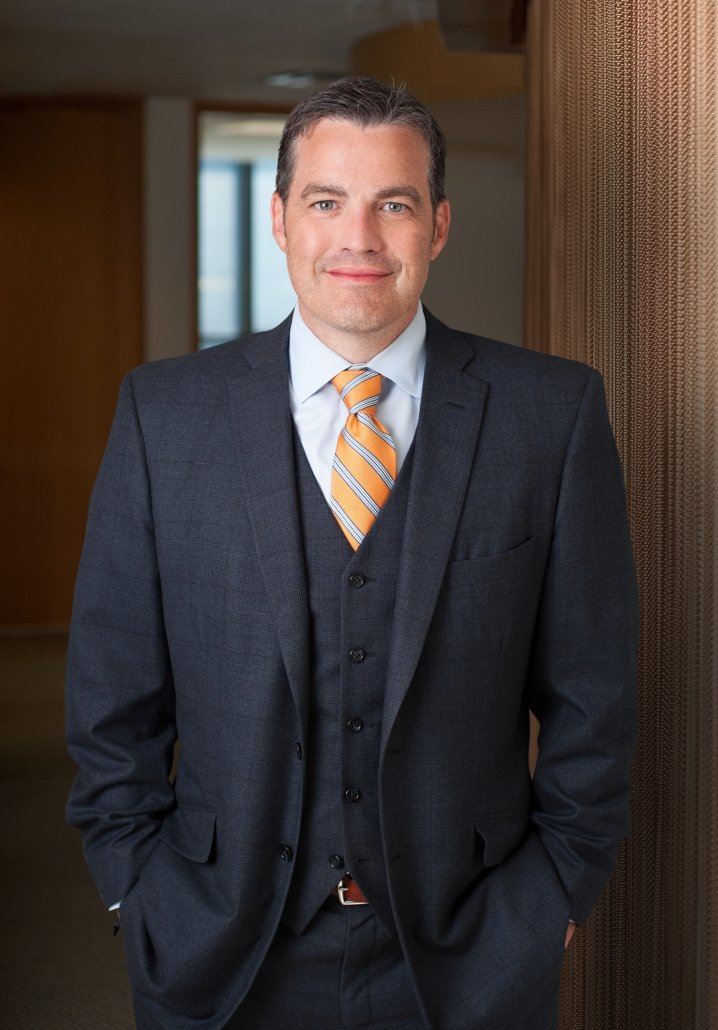
Said Moreland, “the right to a jury trial is guaranteed by the Constitution, and it is the bedrock upon which our justice system is founded. In this case, the jury spoke. My client suffered serious injuries, and the jury awarded him damages. I’m happy I could help make sure Mr. Carlson will now receive the compensation the jury determined he deserves.”

A professional portrait of attorney, Chris Moreland. He's wearing a suit, standing in a professional setting.

[1] A recording of the oral argument 

Halunen Law’s Employment Litigation Practice Group

Chris Moreland is the Chair of Halunen Law’s Employment Litigation Practice Group. His national practice includes substantial verdicts for his clients in state and federal courts across the country, as well as a significant appellate practice, including arguments in the Supreme Courts of Minnesota, Nebraska, and Montana. Chris was selected several times to the Super Lawyers Rising Star list, and in 2018, he was selected to the Minnesota Super Lawyers list. Learn more about Chris and his work at Halunen Law.


A closely cropped illustration of the Minnesota flag focusing on the Minnesota seal in blue, red, and yellow.

A Victory to Minnesota Employees

The Minnesota Supreme Court has just handed a victory to Minnesota employees who have been disabled as a result of a workplace injury. The Court’s recent ruling in the Daniel v. City of Minneapolis case, states that employees who develop a disabling condition resulting from an on-the-job injury may now recover workers’ compensation benefits for that injury, and they may bring a separate claim for disability discrimination under the Minnesota Human Rights Act. This case overturns a 1989 Minnesota Supreme Court case, Karst v. F.C. Hayer Co., which held that the sole recourse for employees with disabilities resulting from an on-the-job injury was to receive workers’ compensation benefits. For three decades the Karst ruling has prevented employees with disabilities from a workplace injury from pursuing their rights under the Minnesota Human Rights Act. As a result of the Daniel decision, Karst has been overruled, and disabled employees across the state may now pursue all of the remedies they are entitled to under the law.

Minnesota Lawyer:

Read recent article in the Minnesota Lawyer about this case:

Court rules for firefighter in disability case

Star Tribune:

Read a recent article in the Star-tribune about this case:

Former Minneapolis firefighter will be able to sue for disability discrimination, high court rules

Text: Whistleblower in bold black letters with a yellow highlight in the background.

CBS’s New Whistleblower Series Shines a Light on Real-Life Whistleblowers

CBS television launched the new 8-part series called Whistleblower On July 13. The show offers an in-depth look at the remarkable courage and resolve of several whistleblowers, and the difficult paths they take that lead to justice.

Familiar territory for Halunen Law Qui Tam/Whistleblower attorneys. Halunen’s attorneys are in the daily fight to prosecute cases brought by whistleblowers to challenge unlawful corporate conduct. We know the toll these cases can take on those courageous enough to challenge unethical practices and we do everything we can to alleviate that burden.

“We’re pleased to see such a bright, national spotlight put on these heroes with the whistleblower series. It presents an opportunity to educate a broader audience about the profound changes these cases can bring and the types of fraud that still occur today. We encourage you to tune in on Friday nights and follow the whistleblower series.”


Check Your Local Listings for Times

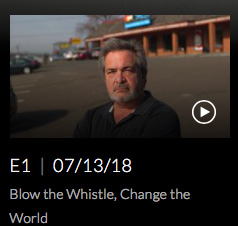
CBS Launches Whistleblower - S1E1

Episode One: “Blow the Whistle, Change the World”

Two dentists were alarmed by the unsafe and fraudulent practices they observed as standard practice at a pediatric dental chain that provides services in underserved communities. They challenged those practices that they feared would lead to overtreatment, overbilling and putting children at risk. The episode also features a whistleblower who took on pharmaceutical giant Bristol-Myers Squibb accusing the company of using illicit bribes, expensive vacations, and sumptuous dinners to gain illegal access to patient medical records and influence doctors to prescribe the company’s high-priced meds. Watch the full episode

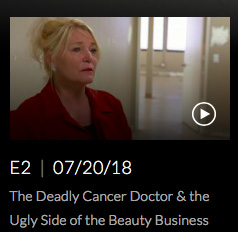
CBS Launches Whistleblower - S1E2

Episode Two: “The Deadly Cancer Doctor & the Ugly Side of the Beauty Business”

What could be worse than being diagnosed and treated for cancer? Later finding out that your doctor lied and you never had it to begin with. An office manager at a cancer center blew the whistle on the oncologist running the practice when he discovered the doctor was giving chemotherapy to more than 500 patients who do not need it. The scope of what the whistleblower discovered was staggering. This episode also features the story of courageous whistleblowers who challenged the unethical practices of Marinello Schools of Beauty after uncovering fraud against its students. Watch the full episode

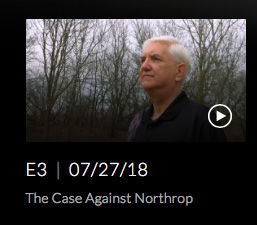
CBS Launches Whistleblower - S1E3

Episode Three: “The Case Against Northrop”

James Holzrichter thought he had landed his dream job working at Northrop, one of the top military contractors in the world. But, once he moved from testing equipment to “product assurance,” that is, ensuring that the company was properly billing the government for parts, he began to notice some disturbing trends. Taking nearly two decades to be resolved this case is the featured story for the full episode. Watch the full episode

CBS Launches Whistleblower - S1E4

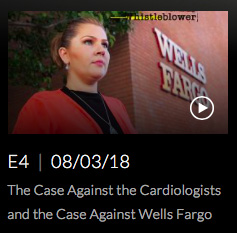
Episode Four: “The Case Against the Cardiologists and the Case Against Wells Fargo”

In this episode Host, Alex Ferrer investigates the case against cardiologists engaging in unethical, potentially life-threatening practices. The first segment features Dr. Michael Jones, a successful cardiologist in Lexington, Ky., who noticed a troubling pattern in the patients showing up in his office. They were all from the same part of rural Kentucky, and each of them seemed to have had expensive heart procedures he believed they didn’t need. The second segment features courageous whistleblower Jessie Guitron who sounded the early alarms in what subsequently became a huge banking scandal for Wells Fargo amid allegations that bank employees were encouraged to open credit card accounts for customers without their knowledge, leading to even larger, systemic fraud. Watch the full episode

CBS Launches Whistleblower - S1E5

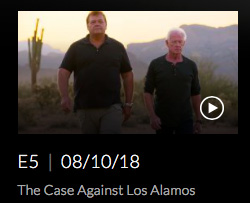
Episode Five: “The Case Against Los Alamos”

Los Alamos National Laboratory, the birthplace of the atomic bomb and home to some of the country’s most dangerous secrets had some troubling security issues. Following a series of embarrassing security lapses and thefts, former police chiefs Glenn Walp and Steve Doran were brought in to review and bolster security at the facility in 2002. But almost immediately, it was clear that things were far worse than they had thought. Watch the full episode

CBS' Whistleblower - Episode 6

Episode Six: “The Case Against eClinicalWorks; the Case Against Chartwells”

Thanks to electronic medical records, millions of Americans now expect their doctors to have the right information about their care at their fingertips. But could faulty digital medical records cost lives? Host Alex Ferrer investigates the case of medical charting software gone wrong. In the second part of this episode, New York Chef Jeffrey Mills, became executive director of the Office of Food and Nutritional Services for DC Public Schools (DCPS) and discovered an entrenched system of spoiled, and wasted food served across the school system. His whistleblower actions resulted in a $19.4 million settlement against the food service provider. Watch the full episode

CBS' Whistleblower - Episode 7

Episode Seven: “The Case Against Second Chance Body Armor”

What would you do if you had dedicated your career to protecting those who protect us, only to discover the company that once saved your life may be putting others at risk? Dr. Aaron Westrick was the research director for America’s largest body armor company – Second Chance Body Armor – and was the first official to oppose the sale of bulletproof vests made with Zylon fiber. Based on his disclosures, these defective vests were forced off the market and police officer’s lives were saved. Dr. Westrick’s story is featured in this hour-long episode. Watch the full episode

Halunen Law - ICOSP Group Pic
Emily (far right) with representatives in attendance from other Turner syndrome organizations. From left, Sachiko Kishimoto (TSSJ/Japan), Arlene Smyth (TSSS/UK), Denise Culin (TSGA/US)

Halunen Law staff member Emily Havrilak is a woman with Turner syndrome (TS) and President-elect of the Turner Syndrome Society of the United States (TSSUS). TS is a chromosome abnormality found in about 1 in every 2,000 females that affects physical growth and development. Earlier this month she had the privilege of representing her organization at a meeting of the International Coalition of Organizations Supporting Endocrine Patients (ICOSEP) in Frankfurt, Germany. Leaders of various groups from 12 countries came together to discuss the importance of monitoring children’s growth and related medical issues. For more information, visit www.turnersyndrome.org and www.icosep.org or email Emily at havrilak@halunenlaw.com.


Save

Halunen Law was recently featured in an article, publish in Bloomberg Businessweek, Fortune, and Money that recognizes them for some of their outstanding work concerning different whistleblower retaliation and government fraud cases. Read the full article: Righting Corporate Wrongs: One Law Firm’s Fight for Justice

Besides being named as a 2013 Super Lawyer, Halunen Law Partner Susan Coler was named on the list of the top 50 women attorneys in Minnesota. “It is an honor to be included,” says Coler. “I so respect the many women attorneys in Minnesota who have blazed legal trails and represented their clients with great advocacy, integrity and compassion.  It is an honor to be named in the company of those women.” Click here for more information about Coler.

© 2026 Halunen Law | Minneapolis Employment Attorneys